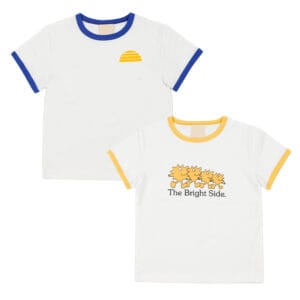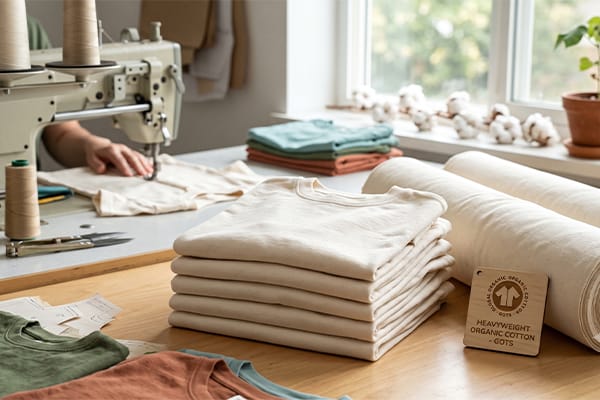
Manufacturing High-Quality, Heavyweight Organic Cotton Tees for Kids
Heavyweight organic cotton tees for kids can look premium in a sample, but they can also become stiff, hot, or inconsistent after washing. That creates risk for brands that need comfort and reliable sizing. The solution is not simply choosing a higher GSM. It is developing the fabric, fit, finishing, and production process together.
A high-quality heavyweight organic cotton tee for kids balances fabric weight, softness, breathability, fit stability, wash durability, and bulk consistency. The best result usually comes from controlled product development, not from choosing the highest GSM. Brands should evaluate yarn, knit structure, shrinkage, neckline recovery, stitching, and supplier quality control before production.
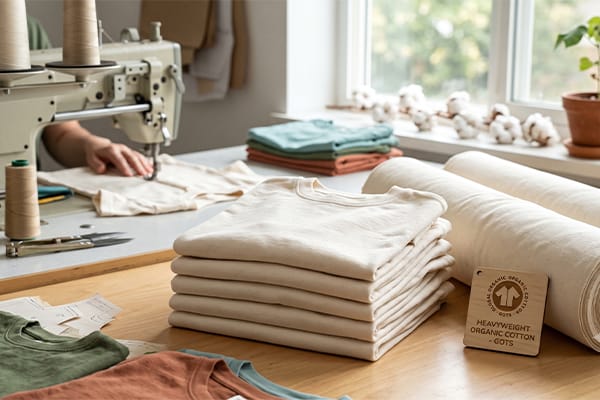
I have seen many brands start with one question: “What GSM should I use?” That question matters, but it is not enough. A premium children’s tee needs to feel substantial while still working for real kids who run, stretch, wash, spill, and wear the same favorite shirt again and again.
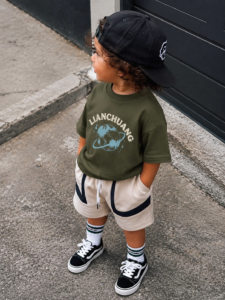
A heavyweight tee can give a children’s brand a stronger shape, richer handfeel, and more premium streetwear look. However, the same weight can become a problem if the fabric feels rigid or traps heat. Kids notice discomfort quickly, even when adults like the appearance.
A premium heavyweight organic cotton tee for kids should feel structured but not hard. The fabric should have enough body to hold its silhouette, but it should still allow movement, breathability, and skin comfort. GSM, yarn quality, knit construction, finishing, and pattern balance all affect the final wearing experience.
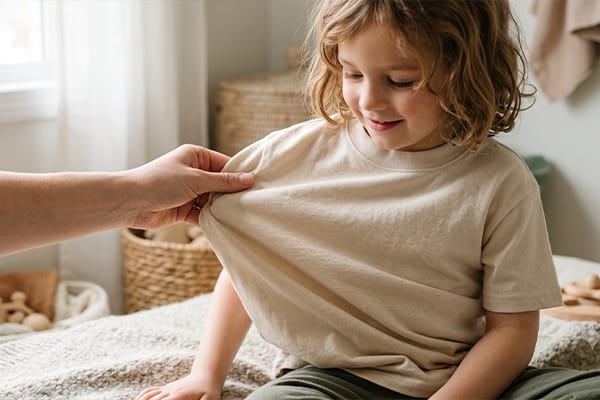
Heavyweight is a trade-off, not a trophy
Many buyers ask for 240 GSM, 260 GSM, or even higher because they associate weight with quality. I understand that instinct. In streetwear, a heavier tee often feels more premium in the hand. It can also support boxy cuts, dropped shoulders, and bold graphic printing.
However, children’s apparel has different priorities from adult apparel. A child does not care if a tee feels “luxury” on a hanger. A child cares if the neckline scratches, the body feels too hot, or the sleeve restricts movement.
For kidswear, I usually treat heavyweight fabric as a controlled trade-off:
| Factor | Benefit of heavier fabric | Possible risk |
|---|---|---|
| Structure | Better boxy or oversized silhouette | Fabric may feel stiff |
| Handfeel | More substantial and premium touch | Less softness if finishing is poor |
| Printing | Better surface for some graphics | Print may feel heavy if technique is wrong |
| Durability | Can resist some wear better | Shrinkage can become more visible |
| Brand positioning | Supports premium pricing | Comfort complaints can hurt repeat sales |
GSM is only one part of fabric quality
GSM means grams per square meter. It measures fabric weight, not total quality. A 240 GSM fabric can feel soft and breathable if the yarn, knitting, and finishing are controlled well. A 220 GSM fabric can feel rough if the yarn is low grade or the finishing is too harsh.
When I help customers develop heavyweight kids’ T-shirts, I usually look at:
- Yarn count and yarn quality
- Knit structure, such as single jersey or interlock
- Fabric compactness
- Surface smoothness
- Dyeing and finishing method
- Shrinkage behavior after washing
- Handfeel after printing
- Recovery at neckline and cuffs
Organic cotton also needs careful evaluation. It may support a brand’s sustainability direction, but organic cotton alone does not automatically make a tee soft, durable, or premium. The fabric source, spinning, knitting, dyeing, and finishing still decide the finished garment experience.
The best GSM depends on the wearing scenario
A boutique graphic tee, a summer oversized tee, and a premium fall layering tee may all need different fabric weights. For many children’s T-shirt programs, brands often explore a range such as 200–260 GSM, depending on fit and market positioning. This is not a fixed rule. It is a development starting point.
For example:
- Everyday organic tee: Often needs softness and breathability first.
- Streetwear-inspired oversized tee: Often needs more body and shape retention.
- Graphic tee: Needs a smooth print surface and stable shrinkage.
- Premium winter layering tee: Can accept more weight if comfort remains good.
In our sampling work at Kids Wear Factory, I prefer to compare fabric swatches and sample garments rather than approve weight on paper only. A small difference in finishing can change the final feel more than buyers expect.
Why does organic cotton not guarantee high-quality kids’ T-shirts?
Organic cotton is important for many children’s clothing brands, especially those focused on responsible materials. Still, it does not remove development risk. A tee can use organic cotton and still have poor shrinkage, weak seams, uneven color, or a neckline that loses shape after washing.
Organic cotton is a material choice, not a complete quality guarantee. A high-quality kids’ T-shirt also depends on yarn selection, knit construction, dyeing, finishing, pattern development, stitching, shrinkage control, and inspection. Buyers should verify fabric documents and test performance based on their target market and product requirements.
Quality comes from the full chain
When a buyer compares kids clothing manufacturers, I suggest looking beyond the fabric label. A supplier may say “organic cotton,” but the brand still needs to understand how the tee will perform in real production.
A children’s tee passes through many stages before it reaches a customer:
- Fabric sourcing
- Yarn and knit selection
- Dyeing or garment washing
- Fabric relaxation
- Cutting
- Sewing
- Printing or embroidery
- Finishing
- Measurement inspection
- Needle detection where required
- Packing and shipment
If one stage is poorly managed, the finished tee can fail the brand’s expectations.
For example, I once reviewed a sample that looked excellent before washing. The fabric felt thick, and the color looked clean. After a home wash test, the body length changed more than expected, and the neckline became slightly wavy. The issue was not only “fabric quality.” It involved shrinkage control, rib selection, sewing tension, and finishing.
Children’s tees need children-specific judgment
Adult T-shirt logic does not always work for kids. A heavy adult tee can feel fashionable and substantial. On a child, the same logic may create discomfort.
For heavyweight organic cotton tees for kids, I pay close attention to these areas:
| Development area | Why it matters for kids |
|---|---|
| Neckline recovery | Kids pull shirts on and off roughly |
| Shoulder shape | Oversized fits must not slide awkwardly |
| Sleeve opening | Movement should feel easy |
| Body length | Shrinkage can make sizing inconsistent |
| Skin feel | Children may reject rough seams or stiff fabric |
| Print feel | Large graphics should not become uncomfortable |
| Size grading | Each size must fit the correct age range |
A neckline is especially important. Kids often stretch the collar when dressing. If the rib has poor recovery, the tee can look worn after only a few uses. A premium brand may lose customer trust quickly if this happens.
Certifications should be verified, not assumed
Many buyers ask about GOTS, OEKO-TEX Standard 100, OCS, CPC, BSCI, or other standards. These documents can be relevant, but they should be treated carefully. Certification status depends on fabric source, order requirements, supplier documentation, and target market verification.
As a manufacturer, I can support buyers with document collection and production alignment. However, brands should verify compliance needs with qualified professionals, testing partners, or import specialists for their specific market.
For procurement teams, I recommend asking suppliers for:
- Fabric composition confirmation
- Available certification documents
- Color fastness references or test options
- Shrinkage expectations
- Bulk production tolerance standards
- Needle detection or safety process information
- Care label recommendations
This approach keeps the discussion practical. It also avoids relying on vague claims like “organic means premium” or “heavyweight means durable.”
How should brands evaluate heavyweight organic cotton tees for kids before bulk production?
A sample can look strong, but bulk production is where quality control becomes more serious. Brands should evaluate fit, handfeel, shrinkage, color, stitching, neckline recovery, and print performance before approving production. The goal is to reduce surprises between sample approval and final shipment.
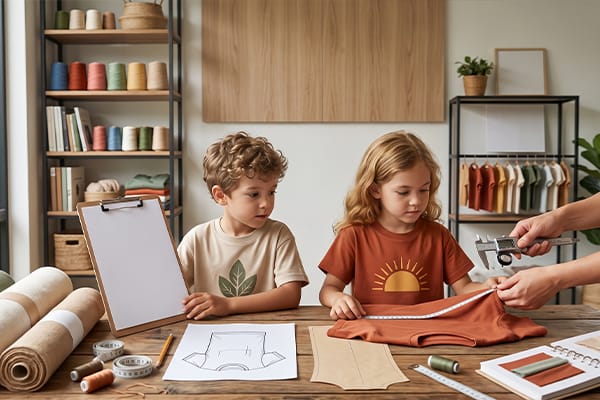
Brands should evaluate heavyweight organic cotton tees for kids through structured sampling, wash testing, fit review, size chart confirmation, fabric approval, print testing, and bulk QC planning. A good supplier should help control the transition from prototype to production so the final tees match the approved standard as closely as possible.
Start with the brand position
Before choosing fabric, a brand should define the product role. A tee for a premium organic basics line is different from a tee for a bold streetwear drop.
I usually ask buyers:
- Is this tee for summer, winter, or year-round wear?
- Should the fit be regular, relaxed, boxy, or oversized?
- Will the tee carry large graphics or small branding?
- Will the garment be pigment dyed, piece dyed, or made from pre-dyed fabric?
- Should the handfeel be crisp, soft, washed, or structured?
- What price point does the brand need to support?
- What age range and size chart will the style cover?
These questions help prevent the common mistake of choosing a fabric before defining the wearing scenario.
Use samples to test decisions, not just appearance
Sampling is not only about making one good-looking prototype. It is a tool for reducing risk. In our usual development process, a sample may take around 7–15 days, depending on fabric availability and design complexity. That timeline can vary, but the purpose stays the same: confirm the product before bulk production.
A practical sample review should include:
Fit check
- Shoulder width
- Body length
- Sleeve length
- Chest width
- Neck opening
Wear comfort
- Skin feel
- Breathability
- Movement
- Weight balance
Wash behavior
- Shrinkage
- Twisting
- Neckline shape
- Color change
- Print cracking or stiffness
Construction
- Seam strength
- Stitch density
- Rib recovery
- Hem quality
- Label comfort
Branding
- Neck label placement
- Care label feel
- Hangtag and packaging plan
- Print size and placement
For premium kidswear brands, I suggest testing at least one wash before final approval. Some issues only appear after laundering. A fabric that feels perfect before washing may shrink too much. A neckline that looks clean on a table may stretch after a child pulls it over the head several times.
Control bulk production from the approved sample
The biggest buyer risk is inconsistency between sample and bulk. A sample may use a beautiful fabric roll, but bulk fabric can vary in shade, handfeel, width, or shrinkage if controls are weak.
Brands should ask how the factory manages:
| Bulk control point | Buyer risk if ignored |
|---|---|
| Fabric lot approval | Different handfeel or color |
| Cutting relaxation | Twisting or size change |
| Measurement tolerance | Inconsistent sizing |
| Print placement | Uneven brand appearance |
| Sewing tension | Wavy seams or puckering |
| Rib matching | Loose neckline recovery |
| Final inspection | Defects reach customers |
At Kids Wear Factory, our work as a kids wear factory often involves helping buyers move from concept to final production. Some brands arrive with complete tech packs. Others bring reference photos, artwork, or a target silhouette. In both cases, I believe the most important step is turning a creative idea into measurable production standards.
Those standards may include:
- Target GSM range
- Fabric composition
- Approved color standard
- Approved sample measurements
- Size grading
- Print technique
- Label and packaging details
- Wash care instructions
- Inspection criteria
When these details are clear, bulk production becomes easier to manage. When they are vague, problems often appear late.
Choose the right print and finishing method
Heavyweight tees are often used for graphic kidswear. That makes print technique important. A large print can change the handfeel of the garment, especially on smaller children’s sizes.
Common options include:
- Screen printing for strong color and scalable production
- Digital printing for detailed artwork and smaller runs
- Water-based printing for a softer surface feel
- Puff printing for streetwear texture
- Embroidery for premium branding
- Appliqué or patchwork for dimensional design
Each method affects comfort and durability. For example, puff printing can create a fun streetwear effect, but it may feel too heavy if the artwork is too large on toddler sizes. Water-based printing may feel softer, but artwork, fabric color, and production needs must be checked.
This is why sample development matters. The best result comes from testing the fabric, print, and fit together.
Frequently Asked Questions
What GSM is best for heavyweight organic cotton tees for kids?
There is no single best GSM. Many brands explore around 200–260 GSM for premium kids’ tees, but the right choice depends on fit, season, market position, and comfort needs. A slightly lighter fabric with better yarn, knitting, and finishing can outperform a heavier but stiff fabric.
Is organic cotton always better for children’s T-shirts?
Organic cotton can support a brand’s material strategy, but it does not automatically guarantee softness, durability, or premium quality. Buyers should also evaluate yarn quality, knit structure, dyeing, finishing, shrinkage, sewing, and verified documentation based on the target market and order requirements.
Why do heavyweight kids’ tees shrink after washing?
Shrinkage can happen because of fabric construction, cotton behavior, dyeing, finishing, cutting relaxation, or washing conditions. Brands should ask suppliers about expected shrinkage and review washed samples before bulk approval. Measurement tolerance should also be confirmed before production.
Are heavyweight tees comfortable for toddlers and young children?
Heavyweight tees can be comfortable if the fabric is soft, breathable, and properly patterned. However, very thick fabric may feel restrictive or warm. For younger children, neckline recovery, seam comfort, movement, and easy dressing are often more important than maximum fabric weight.
What should I send to a factory before developing a custom kids’ tee?
You should send your target GSM, fit direction, size chart, artwork files, fabric preference, color references, branding details, and intended wearing scenario. Reference photos also help. A clear brief allows the manufacturer to suggest fabric, construction, printing, and sampling options more accurately.
Conclusion
Manufacturing high-quality, heavyweight organic cotton tees for kids requires more than selecting a thick fabric. The best tee balances structure, softness, breathability, shrinkage control, neckline recovery, print comfort, and bulk consistency. Organic cotton is only one part of the quality story. If you are developing a premium kidswear collection, I invite you to discuss sample development with your target GSM, fit direction, size chart, artwork or design files, and intended wearing scenario.