Bamboo vs. Organic Cotton: Choosing the Best Sustainable Fabric for Your Kids’ Line?
Sustainable fabric choices can feel simple at first, but they often become risky once sampling starts. A fabric may feel beautiful in the hand, then shrink, pill, twist, fade, or miss the brand story after washing. I usually guide kidswear brands to compare bamboo, organic cotton, and blends by product use, not by trend.
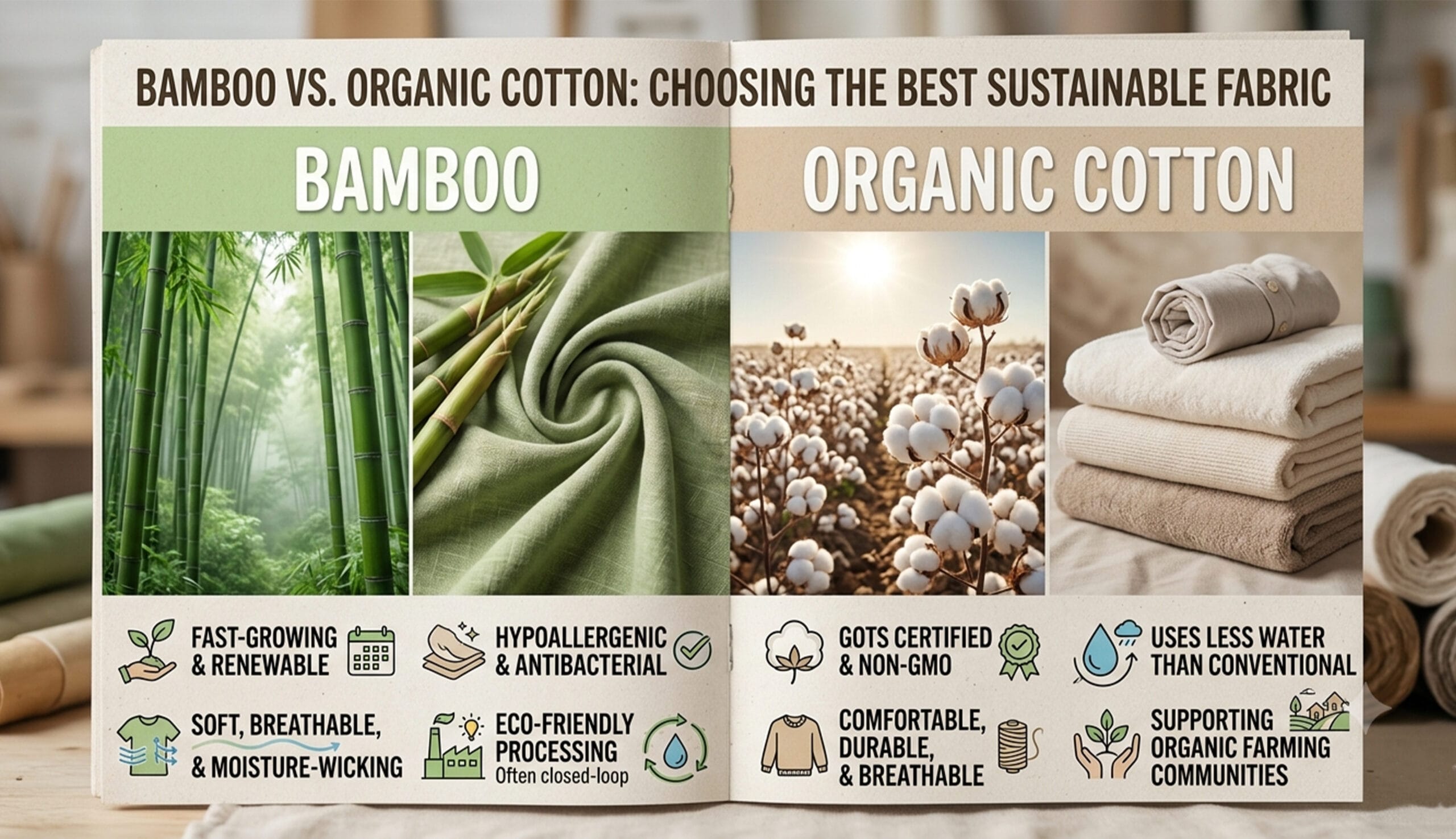
The best sustainable fabric for a kids’ line depends on the product. Organic cotton is often strong for T-shirts, basics, and repeatable core styles. Bamboo can suit soft loungewear, sleepwear, and draped silhouettes. Bamboo-cotton blends can reduce launch risk when brands want softness, structure, and more stable production.
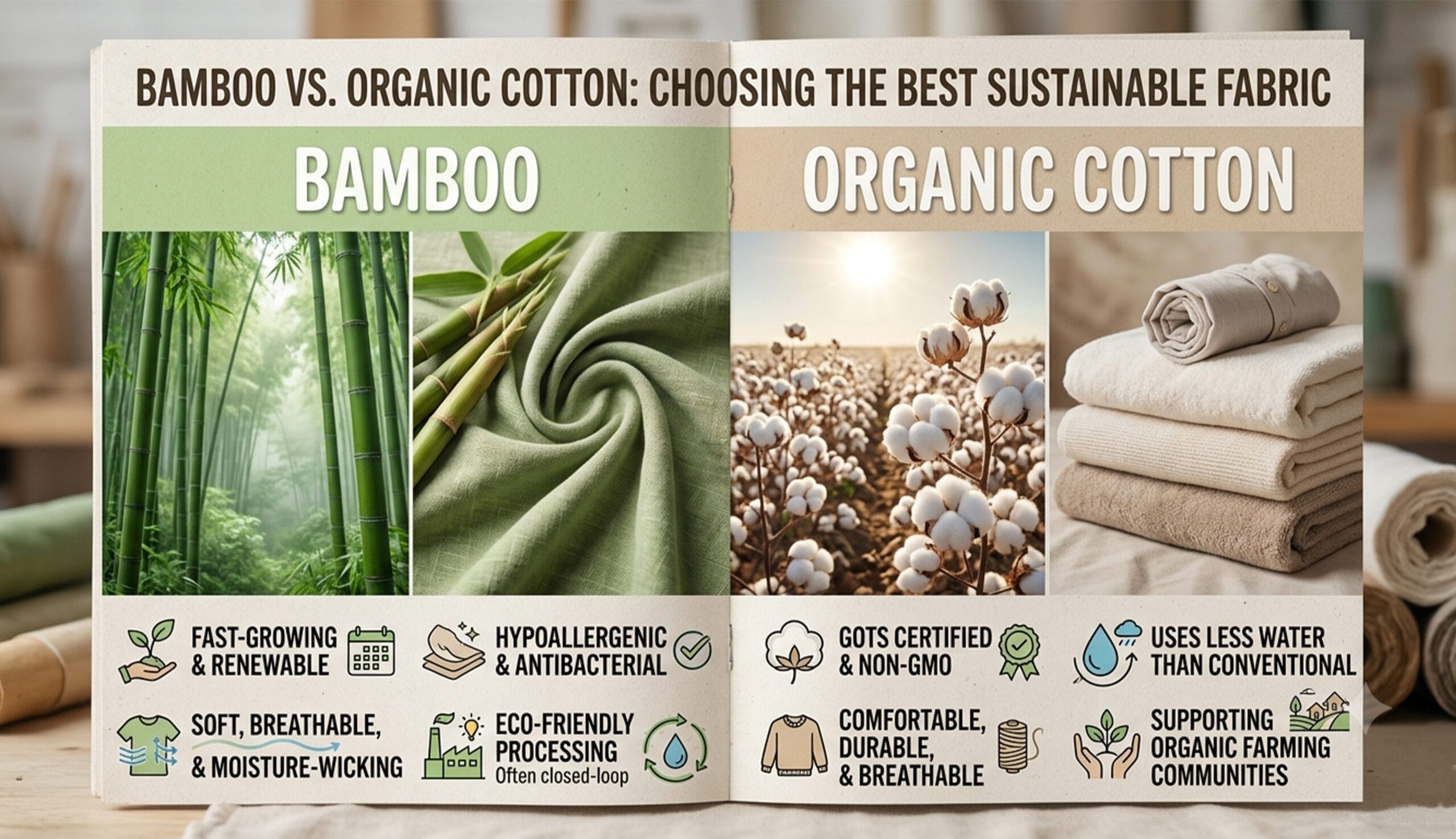
The real question is not “Which fabric is better?” The better question is “Which fabric behavior matches this garment, this customer, and this launch plan?” I have seen brands make smarter decisions when they test fabric performance before falling in love with sample handfeel.
Which sustainable fabric is best for children’s T-shirts and everyday basics?
Choosing a sustainable fabric for children’s T-shirts sounds easy until the first wash test happens. Parents expect comfort, but they also expect shape retention, color stability, and durability. If a core T-shirt becomes shorter, wider, twisted, or rough after washing, the brand takes the blame.
Organic cotton is often a strong sustainable fabric choice for children’s T-shirts, everyday basics, and repeat styles because it offers familiar structure, good wash durability, clear brand positioning, and easier production repeatability. Bamboo or blends may still work, but buyers should test shrinkage, pilling, printing, GSM, and bulk consistency first.
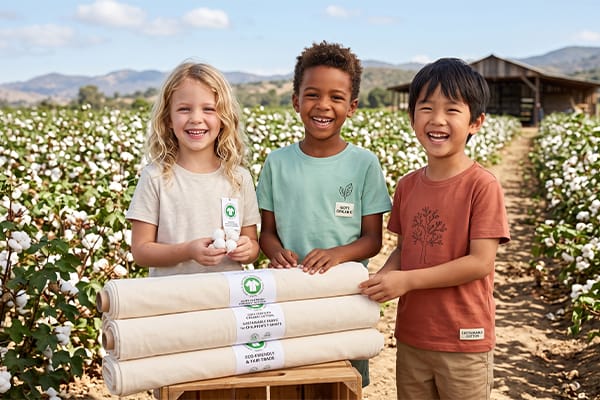
Why organic cotton often works well for core products
In my sampling work with kidswear brands, I often see organic cotton chosen for core T-shirts, bodysuits, sweatshirts, leggings, and everyday sets. The reason is practical. Organic cotton usually gives brands a familiar balance of softness, structure, print performance, and wash behavior.
It also supports clear sustainable positioning, as long as the buyer verifies documents such as GOTS, OCS, or OEKO-TEX Standard 100 when those claims matter. I do not treat certification logos as decoration. I always suggest that brands check certificate scope, validity, product category, and supplier chain documents before using claims on labels or websites.
For a children’s T-shirt line, organic cotton can support:
- Stable repeat production
- Clearer size grading and fit control
- Better structure for oversized shapes
- Reliable screen printing or water-based printing
- A familiar handfeel for parents
- A clean sustainability story when documents are verified
However, organic cotton is not automatically perfect. Fabric construction matters. A lightweight 150 GSM jersey behaves very differently from a 220 GSM compact cotton jersey. A loose knit may twist or shrink more. A heavier jersey may feel premium but cost more and affect summer wearability.
What I check before recommending organic cotton
When a customer asks me whether organic cotton is “safe” for their first kidswear line, I usually move the conversation toward measurable checks.
| Check item | Why it matters for kidswear |
|---|---|
| GSM | Affects thickness, drape, price, and perceived quality |
| Shrinkage | Helps protect sizing after home washing |
| Color fastness | Reduces fading and staining complaints |
| Pilling | Affects surface appearance after wear |
| Print compatibility | Important for graphic T-shirts and logo pieces |
| MOQ | Impacts launch budget and color range |
| Lead time | Affects delivery planning and seasonal drops |
For example, a brand building oversized kids’ graphic tees may need a cotton jersey with enough body to hold shape. A very soft, loose fabric might feel nice, but it may not support the boxy silhouette. On the other hand, a baby basics brand may prefer a softer and lighter fabric for comfort.
I once worked with a start-up brand that first chose fabric only by touching swatches. After one wash test, the favorite option lost its shape. The final choice was less dramatic in handfeel, but much stronger for repeat production.
That lesson is common. Sample handfeel is only one part of fabric evaluation. For children’s clothing, the fabric must survive real use, repeated washing, and brand expectations.
When does bamboo fabric make sense for kidswear?
Bamboo fabric often attracts brands because it can feel smooth, soft, and lightweight. That first impression can be powerful. But if a brand chooses bamboo only for softness, it may miss important production questions around shrinkage, pilling, dyeing, color consistency, and long-term supply.
Bamboo fabric can make sense for kidswear when softness, drape, and lightweight handfeel are important, especially for sleepwear, loungewear, relaxed tops, and fluid silhouettes. Brands should still verify wash performance, shrinkage, pilling, print results, color stability, MOQ, lead time, and sustainability claims before bulk production.
Where bamboo can perform well
I usually consider bamboo-based fabrics for styles where the garment should feel soft, smooth, and relaxed. These may include:
- Kids’ sleepwear
- Loungewear sets
- Relaxed long-sleeve tops
- Lightweight summer pieces
- Soft base layers
- Draped baby or toddler styles
Bamboo viscose or bamboo-derived fabrics can offer a pleasant handfeel, but buyers should be careful with sustainability language. Bamboo as a plant may grow quickly, but the finished textile depends on processing, chemical management, mill practices, and certification documents. I am not a sustainability auditor, so I always suggest that brands verify claims through supplier documentation and, when needed, qualified third-party evaluation.
What can go wrong with bamboo?
Bamboo fabric can be beautiful, but it needs careful testing. In production discussions, I pay attention to these risks:
Shrinkage after washing
Some bamboo fabrics may shrink more than expected if the construction and finishing are not controlled.Pilling or surface fuzz
Very soft fabrics can sometimes show surface wear faster, depending on yarn quality and knit structure.Color variation
Bamboo blends may absorb dye differently from cotton. Dark colors need extra checking.Print performance
A print that looks sharp on cotton may behave differently on bamboo or bamboo blends.Shape retention
Drape is nice for lounge pieces, but it may not support boxy streetwear shapes.Supply stability
A fabric that is available during sampling may not always be easy to repeat in bulk.
Bamboo by product type
| Product type | Bamboo suitability | Key checks |
|---|---|---|
| Sleepwear | High | Shrinkage, softness after wash, color fastness |
| Loungewear | High | Pilling, drape, seam recovery |
| Graphic T-shirts | Medium | Print clarity, GSM, shrinkage |
| Oversized streetwear tees | Medium to low | Structure, neck rib stability, fit retention |
| Hoodies | Case by case | Weight, recovery, surface durability |
| Baby basics | Case by case | Testing, certification documents, wash durability |
Bamboo can be a strong option, but it should not be chosen blindly. I prefer to test it through at least one sample round and one wash review before recommending it for a full collection.
Are bamboo-cotton blends the safest sustainable fabric choice for first collections?
A first collection carries pressure. The brand wants a special handfeel, but the budget, MOQ, delivery time, and customer feedback all matter. If a fabric is too experimental, the launch becomes harder to manage. This is where blends often become useful.
Bamboo-cotton blends can be a practical sustainable fabric choice for first kidswear collections because they may combine bamboo softness with cotton structure. They are not automatically better, but they can reduce development risk when brands test GSM, shrinkage, pilling, dyeing, printing, and bulk availability before ordering.
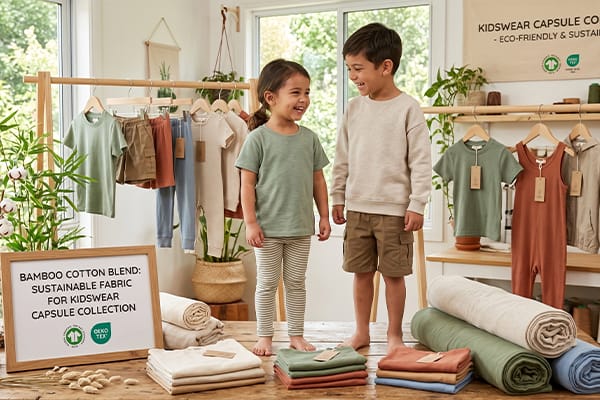
Why blends are often a middle path
Many start-up brands ask me for “the softest sustainable fabric.” I understand the request. Softness sells. Parents touch the garment first, and online brands need positive reviews. Still, I usually ask one more question:
“Do you need the softest fabric, or do you need the best fabric for this product and launch risk?”
A bamboo-cotton blend may help when a brand wants a softer handfeel than standard cotton but still needs more body than a very drapey bamboo fabric. The exact result depends on the blend ratio, yarn, knit, finishing, and GSM.
Common blend directions include:
- Higher cotton ratio: Better structure and familiar production behavior
- Higher bamboo ratio: Softer, smoother, more fluid handfeel
- Added elastane: Better stretch and recovery for fitted items, but more complexity for sustainability positioning
- Heavier GSM: More premium feel, better shape, higher cost
- Lighter GSM: More breathable feel, lower structure, possible transparency risk
Blends for different kidswear styles
| Kidswear style | Fabric direction I would consider | Main reason |
|---|---|---|
| First capsule T-shirts | Organic cotton or bamboo-cotton jersey | Balance of handfeel and stability |
| Lounge sets | Bamboo-cotton blend | Softness with better structure |
| Sleepwear | Bamboo or bamboo-cotton | Smooth handfeel and drape |
| Oversized tees | Organic cotton or cotton-rich blend | Shape and print stability |
| Hoodies | Cotton fleece or cotton-rich blend | Structure, durability, fit retention |
| Boutique sets | Bamboo-cotton interlock or jersey | Soft premium touch |
Why GSM matters as much as fiber
For streetwear-inspired kidswear, I do not only look at fiber. I also look at GSM and construction. A 180 GSM bamboo-cotton jersey and a 260 GSM cotton jersey can create totally different garments, even if both are “sustainable fabric” options in a brand’s sourcing plan.
For example:
- A boxy T-shirt may need 200–240 GSM cotton jersey for shape.
- A summer tee may work better at 160–180 GSM.
- A hoodie may need 300–380 GSM fleece or French terry.
- A sleep set may feel better in a lighter, softer fabric.
- A premium loungewear set may need softness plus enough recovery.
I have also seen brands choose an expensive fabric, then realize the MOQ limits their color range. That can hurt a first launch. Sometimes a slightly simpler fabric allows the brand to launch with better sizing, stronger colors, and more reliable delivery.
Blends deserve attention because they can offer balance. But they still need testing. I would never suggest moving into bulk only because a bamboo-cotton swatch feels good on a desk.
How should brands test sustainable fabric before bulk production?
A sustainable fabric decision should not stop at swatches. Swatches are useful, but they do not show full garment behavior. Once fabric becomes a T-shirt, hoodie, sleep set, or lounge pant, the real performance depends on cutting, sewing, printing, washing, finishing, and packaging.
Brands should test sustainable fabric before bulk production by reviewing lab or mill documents, making fit samples, washing samples, checking shrinkage, measuring GSM, testing print or embroidery performance, confirming color fastness, reviewing pilling risk, and verifying MOQ, lead time, and bulk consistency with the supplier.
My practical evaluation checklist
At Kids Wear Factory, I usually encourage brands to evaluate fabric in stages. This keeps the process clear and reduces emotional decisions.
1. Start with the product type
The same fabric cannot serve every style well. I ask brands to define:
- Is the garment a T-shirt, hoodie, sleepwear piece, or set?
- Is the fit oversized, regular, slim, or relaxed?
- Does the garment need structure or drape?
- Will it carry screen printing, embroidery, puff print, or all-over print?
- Is it for summer, winter, sleep, school, or boutique styling?
2. Confirm fabric specifications
Before sampling, I want to know:
- Fiber content
- GSM
- Yarn count if available
- Knit or woven construction
- Width
- Finishing method
- Color options
- MOQ per color
- Estimated lead time
Some fabric mills, including suppliers such as Tai’an Lianchuang Textile Co., Ltd., may be considered during sourcing discussions, depending on the fabric type and order requirements. I would still advise buyers to evaluate any supplier through samples, documents, testing, and production consistency rather than relying on a name alone.
3. Make real garment samples
A fabric may behave differently after cutting and sewing. A jersey that feels stable on a roll may stretch during sewing. A rib neck may wave. A shoulder seam may grow. A print may crack or lose sharpness after washing.
For children’s clothing, I like to check:
- Neckline recovery
- Sleeve and hem shape
- Side seam twisting
- Print position stability
- Size measurement after wash
- Handfeel after wash
- Surface pilling after wear simulation or repeated washing
4. Review compliance and claims carefully
If a brand wants to market organic cotton, bamboo, OEKO-TEX, GOTS, OCS, CPC, or other compliance-related claims, the documents must be checked. Buyers should confirm which party holds the certificate and whether it applies to the fiber, fabric, dyeing, garment production, or final product.
I can support document collection during manufacturing discussions, but brands should use qualified professional review for legal labeling, children’s product compliance, and market-specific requirements.
A simple decision framework
| Decision factor | Organic cotton | Bamboo | Bamboo-cotton blend |
|---|---|---|---|
| Core T-shirts | Strong | Case by case | Strong if tested |
| Sleepwear softness | Medium | Strong | Strong |
| Streetwear structure | Strong | Weaker | Medium to strong |
| Repeat production | Often stable | Needs checking | Usually practical |
| Print compatibility | Often strong | Needs testing | Needs testing |
| Sustainability story | Clear if certified | Must verify claims | Must verify claims |
| First launch risk | Lower | Higher if untested | Medium to lower |
The best decision usually comes from matching fabric to product, not choosing a winner. When a customer brings me a product type, target handfeel, budget, and launch date, I can usually help narrow the fabric direction before sampling begins.
Frequently Asked Questions
Is bamboo more sustainable than organic cotton?
Bamboo is not automatically more sustainable than organic cotton. The final impact depends on fiber processing, chemical management, dyeing, finishing, factory practices, and verified documents. Brands should avoid broad claims unless they have reliable certification or third-party support for their specific supply chain.
Is organic cotton better for kids’ T-shirts?
Organic cotton is often a strong choice for kids’ T-shirts because it can provide structure, print stability, wash durability, and clear sustainable positioning. However, the final result depends on GSM, yarn quality, knitting, dyeing, finishing, and garment construction.
Should a new kidswear brand choose bamboo-cotton blends?
A bamboo-cotton blend can be a smart first-collection option when the brand wants softness with more structure than bamboo alone. It still needs testing for shrinkage, pilling, color fastness, print performance, MOQ, lead time, and bulk consistency.
What GSM is best for sustainable kidswear?
There is no single best GSM. Kids’ summer T-shirts may use around 160–180 GSM, premium tees may use 200–240 GSM, and hoodies may need 300–380 GSM. The right GSM depends on product type, season, fit, fabric construction, and brand positioning.
What should I test before ordering bulk fabric?
Brands should test shrinkage, color fastness, pilling, GSM, handfeel after washing, print compatibility, seam performance, and measurement stability. They should also verify certification documents, MOQ, lead time, and whether the fabric can be repeated consistently in future production.
Conclusion
Choosing the best sustainable fabric for a kids’ line is not about declaring bamboo or organic cotton the winner. It is about matching fabric behavior to the garment, customer expectations, production risk, and brand positioning. Organic cotton often supports core basics. Bamboo can work beautifully for soft, draped styles. Bamboo-cotton blends can offer a practical middle path. If you are planning a kidswear collection, bring your product type, target handfeel, budget, and launch timeline into the fabric evaluation before sampling. Kids Wear Factory can help you review options and develop samples with a clearer production plan.