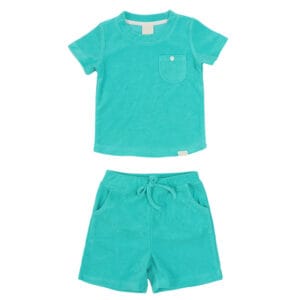
How to start a children's clothing brand?
If you want to start a children's clothing brand, the hardest part is rarely the design. It is the moment a factory asks for your tech pack and you realize you have a mood board instead. The fix is product definition before supplier selection.
To start a children's clothing brand, first define what you are selling and at what price, then convert that into a producible spec: size range, fit, fabric weight, color reference, print technique, and packaging. Choose a manufacturer only after those decisions are written down, because they drive cost, MOQ, and sampling rounds far more than the factory's rate card does.1
Most founders I work with arrive at the factory question before they have answered the product question. That order is backwards. The next few sections walk through what to decide, what it costs, and how to lock it down.
What should you decide before you start a children's clothing brand?
Most new founders I work with start with a mood board and a target price of "not too expensive." That combination stalls fast. A factory cannot quote, sample, or source against a feeling, so the first conversation turns into twenty questions instead of a price.
You should decide your customer and price band, your size range, your fit intent, your fabric family and weight, your color and print direction, and your packaging level. Those decisions determine almost everything a manufacturer needs to know. You can refine them later, but you cannot skip them.
One thing I have learned in more than twenty years on the production side is that the quality of the first conversation predicts the quality of the whole project. When a founder can tell me the age range, the retail price band, and whether the fit should be boxy or close, quoting moves quickly. When those answers are missing, we spend two weeks discovering them through samples.
The decisions that actually change your quote
| Decision | Why it moves your unit cost |
|---|---|
| Target age range and size run | Toddler and junior patterns differ in grading complexity and fabric consumption2 |
| Fit intent (slim, regular, oversized) | Oversized silhouettes use more fabric per garment and change pattern work3 |
| Fabric family and weight | Organic cotton, bamboo blends, linen, and lyocell sit at different price points and MOQs4 |
| Color reference | Stock colours versus custom dyeing changes both cost and lead time5 |
| Print or embroidery technique | Screen, digital, puff, water-based, appliqué, and all-over print each carry different setup and run costs6 |
| Labels, trims, and packaging | Neck labels, care labels, hangtags, and custom packaging add per-unit cost and setup |
| Order quantity per style | Volume spreads fixed costs across more units7 |
| Delivery window | Tight timelines can force air freight or premium fabric sourcing |
Why I ask about price band before fabric
Founders often want to start with fabric because fabric feels creative. I understand that. But fabric is the largest single swing factor in most kidswear cost sheets8, and the right fabric depends on what the garment has to sell for.
A $28 retail kids' tee and a $60 retail kids' tee can look almost identical on a mood board. In production, they are different garments. One may use a mid-weight combed cotton jersey with a simplified print. The other may use a heavier organic cotton, a garment-dyed finish, a puff print, and branded trims throughout. Both are legitimate products. They are not interchangeable.
So my advice is to set the retail band first, work backwards to a target cost, and only then choose the fabric that fits inside it.
What happens when the spec is thin
I have watched projects stall for a month because nobody had decided whether the collection was a spring drop or a back-to-school drop. That sounds trivial. It is not trivial, because the delivery window determines when fabric has to be booked and when production has to be slotted.
Other common stalls include:
- A size range described only as "kids sizes"
- A print described as "something fun"
- A colour described as "a warm cream"
- A fit described as "like the reference, but better"
Each of those is a decision that has been deferred, not a detail that has been forgotten. Deferred decisions reappear later as revision rounds, and revision rounds cost time and money.
How do you turn a reference image into a producible spec?
A reference image shows what you want the garment to look like. It does not tell a pattern maker how the garment should behave. That gap is where most first samples go wrong.
You turn a reference image into a spec by making a series of concrete decisions: size range, fit measurements, fabric weight and handfeel, colour reference, print placement and technique, seam and finish type, and label and packaging requirements. A factory can work from images, but it needs those decisions alongside them.
Founders without a tech pack are usually not blocked by design ability. They are blocked by spec ability. A sketch can be beautiful and still leave the pattern maker guessing about shoulder drop, hem finish, and how the garment should sit on a real child.
What a manufacturer actually needs from you
Based on the projects we handle, a workable starting brief includes:
- Size range — the age or height range you are selling, and whether you want a standard grading or something custom.
- Fit intent — slim, regular, relaxed, or oversized, ideally with a reference garment or two.
- Fabric direction — fibre family, approximate weight, and the handfeel you want. Organic cotton, bamboo, bamboo-cotton blends, hemp, linen, and lyocell all behave differently.
- Colour reference — Pantone references for dyed fabrics, or a clear indication that you want to choose from what is already available.
- Print or embroidery artwork — print files, graphic artwork, or logo files, with placement and size noted.
- Trims and branding — neck labels, care labels, hangtags, packaging, and any private label requirements.
- Quantity per style — even a rough number, because it changes how the quote is built.
- Target delivery window — which season or drop the product is for.
If you have a complete tech pack, we quote from it. If you only have reference images, we can still work — the development team will help translate the references into a draft spec and confirm the open points with you.
How fast quoting and sampling usually move
In our own process, quoting typically takes about two days once the order instructions and quantities are clear. That can extend to around four days when new fabric sourcing is required. Sample lead time generally runs somewhere between seven and fifteen days, depending on fabric availability and design complexity.
I want to be careful with those numbers, because they are ranges, not promises. A simple jersey tee in a stock fabric moves quickly. A garment-dyed oversized hoodie in a custom knit with appliqué and custom packaging does not.
You do not need to be a designer; you need to be a decision-maker
The founders who move fastest are not the ones with the most polished illustrations. They are the ones who answer questions decisively. When I ask whether the neckline should be ribbed or self-fabric, "ribbed, matching body colour" is worth more than three more reference images.
That is also why we usually suggest prototyping with in-stock dyed or printed fabrics, or with undyed greige fabric, before committing to custom fabric development. It shortens the first sample cycle and lets you judge the fit and silhouette before you spend on custom materials.
What does it cost to start a children's clothing brand?
Founders often ask me for a single number before they have described the product. I cannot give one honestly. The same design has no single price, and any quote that ignores that is a quote built on assumptions.
The same design has no single unit price. Fabric choice, printing method, dyeing route, fit complexity, trims, packaging, order quantity, and the number of sampling revision rounds all move cost more than the factory's labour rate does. A lower quote usually means fewer variables were priced in.
This is the single most useful thing I can tell a new founder: compare quotes built on the same spec, or you are not comparing quotes.9 Two suppliers can quote the same reference image and land thousands of dollars apart, simply because one assumed a stock fabric with a single-colour screen print and the other assumed a custom dye lot with an all-over print.
The cost drivers, ranked by how much they usually move
| Cost driver | Typical direction of impact |
|---|---|
| Fabric family and weight | High — often the largest single line in the cost sheet |
| Order quantity per style | High — fixed setup costs spread across more or fewer units |
| Dyeing route (stock vs custom) | High — custom dye lots add cost and lead time |
| Print technique and number of colours | Medium to high — screen setup, colour count, and coverage all count |
| Fit and construction complexity | Medium — panel count, linings, and finishing steps add labour |
| Trims and packaging | Medium — labels, hangtags, and custom bags add up across a run |
| Sampling revision rounds | Medium — each round consumes time, materials, and shipping |
| Factory labour rate | Lower than most founders expect |
Why the cheapest quote is usually the least informative
A low quote is not proof of a good deal. It is often a sign that the spec was underspecified when it was priced.
I have seen this play out repeatedly. A founder receives three quotes, picks the lowest, and then discovers during bulk that the fabric weight is lighter than expected, the print is a simpler technique than the artwork requires, or the packaging is plain rather than branded. None of that is dishonest. It is the natural result of pricing a brief that left those choices open.
Where small-batch starts save money, and where they do not
For a first collection, low volumes are normal and reasonable. The savings come from:
- Choosing fabrics that are already in stock and dyed
- Using existing print screens or simpler print techniques in the first run
- Simplifying trims and packaging for the prototype stage
- Accepting slightly longer lead times to avoid expedited freight
The savings do not come from removing quality control. Inspection, testing, and final checks are not the place to trim a first order, because a problem caught before shipment is far cheaper than a problem caught by a customer.
Is a low MOQ the right way to start a children's clothing brand?
Nearly every founder I work with asks about minimum order quantity in the first email. It is a fair question, and it is usually the wrong first question. MOQ is a trade-off you choose, not a discount you negotiate.
A low MOQ is a real option for starting a children's clothing brand, but it is a trade-off rather than a discount. Small-batch starts usually mean choosing from in-stock fabrics and simplifying trims and packaging in the first prototype. The cost of that flexibility shows up in material selection and per-unit price, not in hidden fees.
In our own production, minimums often start in the low hundreds of pieces per style. That figure is a starting point for discussion rather than a fixed policy, and it shifts with fabric availability, construction, and technique. A stock-fabric tee and a custom-dyed knit hoodie do not sit in the same bracket.
What a small-batch start usually looks like
| Choice | What you gain | What you give up |
|---|---|---|
| In-stock dyed fabric | Faster sampling, lower minimums | Limited colour and weight options |
| Simplified trims in round one | Faster prototype, lower cost | Final branding comes later |
| Stock or simplified packaging | Fewer setup costs | Less out-of-the-box brand presence |
| Single print technique | Lower setup | Less variety across the range |
| Fewer styles, deeper quantities | Better per-unit pricing | Narrower initial assortment |
Why the flexibility cost is not a hidden fee
Founders sometimes assume that a higher per-unit price on a small order means the factory is padding the invoice. In my experience, it usually reflects real economics. Short runs still require pattern development, sample making, cutting setup, machine time, and inspection.10 Those costs do not shrink just because the quantity did.
The honest way to think about it is this: you are paying for optionality. Later, when a style proves itself, your per-unit cost falls as quantity rises. That progression is normal, and you should plan for it rather than fight it.
How to make a small first order work harder
I usually suggest that first-time founders put their development budget into two or three styles rather than eight. Fewer styles mean better fabric pricing, cleaner quality control, and far more useful feedback from real customers. You can expand a proven silhouette next season. You cannot un-spend money on five styles that never sold.
How should you evaluate a children's clothing manufacturer?
Price comparison is the easy part of supplier selection and the least predictive. What actually determines whether your order arrives as expected is how the manufacturer defines, documents, and inspects the product.
You evaluate a manufacturer by asking how they document and inspect a product, not by comparing rate cards alone. Ask about the approved-sample process, fabric and colour confirmation, quality control steps, and the inspection basis. Then verify certifications and test reports directly with the certificate holder or issuing body.
Questions worth asking before you commit
- How do you confirm fabric and colour? Look for a documented reference, such as a Pantone match for dyed fabric, rather than a verbal agreement.
- What is the approved sample, and what does it cover? The approved sample is the physical reference for bulk. Ask what happens if bulk differs from it.
- What quality control steps run during production? In our factory, checks cover fabric shrinkage, colour fastness, elasticity and breathability, fabric defects, seam strength, garment durability, needle detection, and a full final inspection before shipment.11
- Which certificates apply, and can I see them? Our products are produced to comply with standards associated with GOTS, OEKO-TEX Standard 100, OCS, CPC, and BSCI requirements.12 Treat those as documents to request and verify rather than claims to accept.
- Who is my point of contact, and how are changes communicated? Most mismatches trace back to a change that was agreed verbally and never written down.
- What happens if the bulk order does not match the approved sample? A clear answer tells you more than any price list.
On certifications and safety standards
I want to be direct about the limits of my expertise here. I run a manufacturing business, not a testing laboratory. Certification and children's safety requirements vary by market, by age group, and by product type, and they change over time.
So my advice is procedural: request the relevant certificate or test report, check that it covers the specific material and the specific production site, and confirm the current requirements with a qualified testing professional or the relevant authority for your market. Documents are verifiable. Assurances are not.
The signals that matter more than the price list
In our sampling experience, the manufacturers that cause the fewest problems share a few habits. They ask a lot of questions up front. They push back when a spec is unclear. They document approvals in writing. They tell you when a timeline has slipped rather than letting you discover it.
None of those habits show up on a quote sheet. All of them show up in your first production run.
How do you keep your quote, sample, and bulk order the same product?
This is the part that quietly decides whether your first collection is profitable. A brand can survive a higher unit cost. It struggles to survive a bulk order that is not the product it approved.
You keep them the same by locking five things in writing before bulk: the approved sample, the confirmed fabric and colour reference, the final print file, the signed size spec, and the inspection basis. When any of those changes, you re-confirm it in writing and re-price the affected parts.
The five things to lock before bulk production
| What gets locked | What it prevents |
|---|---|
| The approved sample | Disputes about fit, silhouette, and finish |
| Fabric and colour reference | Shade shifts and weight surprises between sample and bulk |
| The final print file | Artwork drift and placement differences |
| The signed size spec | Grading inconsistencies across the size run |
| The inspection basis | Arguments about what "good enough" means |
Why sample-to-bulk gaps happen
I have never seen a sample-to-bulk gap that came from nowhere. In almost every case I have followed, something changed between approval and production and nobody wrote it down. A print file was updated. A fabric was substituted because the original was short. A label size changed.
That is why I treat change control as part of the product, not part of the admin. When a founder sends an updated artwork file after sample approval, we confirm the change, note any cost or timeline impact, and re-approve. It feels slow for one email. It is much faster than discovering the difference in a shipped carton.
A simple approval habit that saves money
Before bulk starts, ask your manufacturer for a one-page summary of what will be produced: fabric reference, colour reference, print file version, size spec, label and packaging details, and the inspection standard. Read it carefully, correct anything that is wrong, and approve it in writing.
That single page is the cheapest insurance in this entire process. It also gives you something concrete to compare against when the finished goods arrive, which is exactly what a first order needs.
Frequently Asked Questions
Do I need a tech pack to start a children's clothing brand?
No, but you do need decisions. A tech pack is simply the document that records size range, fit, fabric, colour, print, and trim choices. If you do not have one, a manufacturer can help you build a draft spec from reference images and then confirm the open points with you.
What is a realistic minimum order quantity for a new kidswear brand?
It depends heavily on fabric, construction, and technique. In our own production, minimums often begin in the low hundreds of pieces per style, but that range shifts with whether you choose in-stock or custom-dyed fabric. Treat any MOQ as a starting point for discussion rather than a fixed rule.
How long does sampling take for a first children's clothing collection?
In our experience, samples typically take around seven to fifteen days, depending on fabric availability and design complexity. Revision rounds add time. Planning for at least one round of revisions is realistic, and it is cheaper than rushing a sample you are not happy with.
Why do quotes for the same design differ so much?
Quotes usually differ because the underlying assumptions differ. One supplier may have priced a stock fabric and a simple print. Another may have priced custom dyeing, a more complex print, and branded packaging. Ask each supplier to list what their quote includes so you compare equivalent scopes.
How do I verify that a manufacturer meets children's safety standards?
Request the relevant certificates and test reports, and check that they cover your specific material, product type, and production site. Because requirements vary by market and age group, confirm the current rules with a qualified testing professional or the relevant authority before you commit to bulk production.
Conclusion
Starting a children's clothing brand is a product-definition exercise before it is a sourcing exercise. Decide who you sell to and at what price, translate that into a spec, and lock the approved sample, fabric and colour reference, print file, size spec, and inspection basis before bulk begins. Treat low MOQ as a trade-off, and compare quotes only when the specs behind them match. If you want help turning a reference image or tech pack into a producible first collection, our development team at Kids Wear Factory can walk you through fabric options, sampling, and pricing for your target retail band.
"Tech Pack for Clothing Production: What It Should Include", https://istanbulfactory.com/tech-pack-for-clothing-production/. Apparel product-development guidance describes technical specifications as the basis for costing, sourcing, sample evaluation, and production planning, supporting the article's claim that supplier comparison should follow documented product definition. Evidence role: general_support; source type: education. Supports: A source should explain that detailed garment specifications are used for costing, sourcing, sampling, and production planning.. Scope note: Such sources support the general workflow, but they may not quantify whether specifications matter more than a particular factory's rate card. ↩
"A Proposed Standard System Based on Height and Girth of Hips", https://www.nal.usda.gov/exhibits/ipd/apronsandkitchens/exhibits/show/the-bureau-of-home-economics/item/97. Children's apparel sizing standards and anthropometric references define distinct body-measurement ranges for child size categories, which provides the technical basis for different grading rules and material-consumption estimates. Evidence role: mechanism; source type: institution. Supports: A source should show that children's apparel sizing systems use age or body-measurement categories and that grading changes measurements across sizes.. Scope note: The source would support the sizing and grading rationale, not the exact fabric consumption for any specific garment. ↩
"A novel approach in predicting virtual garment fitting sizes with ...", https://pmc.ncbi.nlm.nih.gov/articles/PMC10362334/. Garment engineering research treats pattern dimensions, ease allowances, and marker layout as determinants of fabric consumption, supporting the statement that oversized silhouettes alter both pattern work and material use. Evidence role: mechanism; source type: paper. Supports: A source should explain that ease and silhouette affect pattern dimensions and fabric marker consumption.. Scope note: The source would establish the mechanism; actual consumption varies by size, fabric width, marker efficiency, and design details. ↩
"Cutting Edge: Sourcing Materials", https://courses.cit.cornell.edu/cuttingedge/sourcing_matl/10sourcing.html. Textile-market reporting distinguishes fibers such as organic cotton, linen, regenerated cellulosics, and blends by supply volume, certification status, and market availability, providing contextual support for differences in price and sourcing constraints. Evidence role: general_support; source type: institution. Supports: A source should document that textile fibers differ in supply scale, certification requirements, availability, and market pricing.. Scope note: Market reports may not state factory-level MOQs directly, so the support is contextual rather than direct proof of a specific supplier's minimums. ↩
"How to Master Color Approval in Apparel Manufacturing?", https://mfgmerch.com/how-to-master-color-approval-in-apparel-manufacturing/. Textile coloration references describe custom dyeing as a controlled process involving color matching, trial approval, dye-lot production, and quality checks, supporting the claim that custom colors can add cost and lead time compared with stock materials. Evidence role: mechanism; source type: research. Supports: A source should explain that custom dyeing involves color matching, lab dips, dye lots, process control, and production scheduling.. Scope note: The source would explain the production mechanism, while actual cost and schedule effects depend on mill capacity, fiber type, and order size. ↩
"Understanding Fabric Printing Methods and Why It Matters", https://littlecocalico.com/fabric-printing-methods/. Textile printing references distinguish screen, digital, specialty ink, appliqué, and placement or all-over processes by setup requirements, equipment, material inputs, and run suitability, supporting the statement that decoration choices carry different setup and production costs. Evidence role: mechanism; source type: education. Supports: A source should describe technical and economic differences among textile printing and embellishment methods.. Scope note: The source would support relative cost drivers, not the exact price of any listed technique for a specific order. ↩
"Average fixed cost", https://en.wikipedia.org/wiki/Average_fixed_cost. Economic definitions of economies of scale and average fixed cost explain that fixed costs are allocated across more units as output increases, supporting the article's statement that volume can improve per-unit pricing. Evidence role: definition; source type: encyclopedia. Supports: A source should define economies of scale or average fixed cost and explain why unit cost can fall as output rises.. ↩
"The Ultimate Guide to Garment Costing", https://www.netsuite.com/portal/resource/articles/accounting/apparel-costing.shtml. Apparel costing studies commonly identify fabric or material cost as a major component of garment unit cost, supporting the article's emphasis on fabric selection as a primary source of cost variation. Evidence role: general_support; source type: paper. Supports: A source should show that fabric or material cost is a major component of garment cost sheets and can drive unit-cost variation.. Scope note: The word 'largest' may not hold for every product category, especially highly embellished or labor-intensive garments. ↩
"Quotation Comparison in Procurement", https://www.auravms.com/blogs/quotation-comparison-procurement-guide-supplier-quotes. Procurement guidance states that supplier quotations should be evaluated against the same specifications, quantities, and scope of work, supporting the article's warning that unlike assumptions make quotes non-comparable. Evidence role: expert_consensus; source type: education. Supports: A source should explain that bid or quotation comparison requires common specifications, scope, and assumptions.. Scope note: The source would support the procurement principle generally, rather than proving outcomes in children's apparel specifically. ↩
"Cut and Sew Clothing Manufacturers: Costs and Timelines", https://www.arcusag.com/cut-and-sew-clothing-manufacturers-costs-moqs-lead-times/. Garment manufacturing process references describe pattern development, sampling, cutting preparation, sewing operations, and quality inspection as standard production stages, supporting the claim that short runs retain many non-volume-dependent tasks. Evidence role: mechanism; source type: research. Supports: A source should describe garment production stages such as patternmaking, sampling, cutting, sewing, and quality inspection, and distinguish setup work from variable sewing time.. Scope note: The source would support the existence of these tasks, while the cost share of each task depends on the product and factory. ↩
"Session 4 Textiles En", https://www.cpsc.gov/s3fs-public/Session%204%20Textiles%20En.pdf. Textile testing and garment inspection standards include dimensional stability, colorfastness, seam performance, defect classification, and final inspection among recognized quality-control measures, supporting the relevance of the checks listed in the article. Evidence role: general_support; source type: institution. Supports: A source should identify shrinkage, colorfastness, seam strength, fabric defects, and final inspection as recognized textile or garment quality-control areas.. Scope note: The source would validate the categories of checks, not confirm that any particular factory performs them on every order. ↩
"Children's Product Certificate", https://www.cpsc.gov/Business--Manufacturing/Testing-Certification/Childrens-Product-Certificate. Official standard documentation and certificate databases define the scope of GOTS, OEKO-TEX Standard 100, OCS, CPC, and BSCI-related requirements and provide the appropriate basis for verifying whether a product, material, or production site is covered. Evidence role: case_reference; source type: institution. Supports: A source should define each standard's scope and, where possible, verify certificate validity, product coverage, and production-site coverage.. Scope note: Standard descriptions alone do not prove this manufacturer's compliance; current certificates and test reports would be needed for direct verification. ↩