Finding a clothing manufacturer feels overwhelming. Every website promises "high-quality" and "low MOQs," but how can you know who to trust? Choosing the wrong partner can sink your brand before it starts.
To choose the right custom kids' clothing manufacturer, you must look past their marketing claims. Verify their specific quality certifications like GOTS, ask how they maintain consistency when scaling from a small test run to a large bulk order, and confirm they can consult on technical details like fabric and printing.
Finding a manufacturing partner is more than just checking boxes on a features list. It's about asking the right questions to uncover their real capabilities and de-risk your investment. As someone who sees brand inquiries every day, I know the common pitfalls. Let’s walk through how to find a factory that can truly bring your vision to life and grow with you. It starts with learning how to verify what they tell you.
How Can You Verify a Manufacturer's Quality Claims?
You see "premium quality" on every factory's website, but what does that even mean? Trusting these vague terms can lead to receiving clothes that shrink, fade, or fall apart after one wash.
To truly verify quality, ask for specific proof. Request to see their certifications, like GOTS for organic fabrics or OEKO-TEX for safety standards. A serious partner will readily share details on their fabric tests, like those for shrinkage and color fastness, proving their commitment to quality.
At our factory, we know that vague claims don't build trust. Real quality is proven with data and documentation. When we talk to brands, the conversation isn't just about making clothes; it's about protecting their reputation. A technical detail like "color fastness testing" isn't just factory jargon. It’s the process that prevents a customer from emailing you angrily because a new red t-shirt turned their entire load of baby clothes pink. Similarly, "shrinkage testing" ensures the size 2T your customer buys still fits their toddler after laundry day. These details are not extras; they are fundamental to building a brand people love and buy from again. A good manufacturer should be able to provide clear evidence of their processes.
From Vague Claims to Verifiable Proof
Here is a simple table to help you translate a factory's marketing language into concrete questions.
| Vague Claim | Specific Proof to Demand |
|---|---|
| "High-Quality Fabric" | What is the fabric's GSM (grams per square meter)? Can I see a report on shrinkage tests (e.g., under 5%)? |
| "Sustainable Materials" | Do you have current GOTS or OCS certifications? Can you trace the origin of the organic cotton? |
| "Safe for Kids" | Can you provide an OEKO-TEX Standard 100 certificate? Can you ensure CPC (Children's Product Certificate) compliance for the US market? |
| "Durable Construction" | What seam types do you use? Can you provide data from seam strength tests to prevent tears and rips? |
Is a Low MOQ Always the Best Choice for Your Brand?
As a new brand, a low Minimum Order Quantity (MOQ) seems like the perfect solution. It lowers your initial investment and risk. But this can create a false sense of security for your brand's future.
A low MOQ is excellent for testing your first collection. However, you must ask how the factory handles scaling up. A process that works for 100 pieces is very different from one that works for 1,000, and you need to ensure quality and color remain consistent.
From the questions we get, many brands focus only on that initial MOQ number. But it's just one part of the story. The real question is about capability. A factory might offer a 100-piece MOQ, but how do they achieve it? Often, these small runs are produced in a separate sample room, not on the main production lines. This is great for a test, but when you come back with a successful design and want 1,000 pieces, the production method changes completely. This can lead to unexpected variations in color, fit, and even fabric feel. A transparent partner will explain their process for both small and large batches, helping you plan for success.
For Startups: Beyond the MOQ
If you're just starting, you need more than just production. You need a partner. Your factory should help you refine your designs, suggest the right materials, and guide you through the sampling process. A low MOQ is a sign that a factory is willing to work with emerging brands, but their support for design development is what will truly help you succeed.
For Established Brands: Consistency at Scale
If you're an established brand, your biggest concern is consistency. You have a loyal customer base that expects the same great quality with every purchase. When you talk to a new factory, ask them directly how they ensure color matching across different dye lots and how their QC process guarantees every garment in a 5,000-piece order meets the same standard as your approved sample.
What Does 'Full Customization' Really Mean?
Many manufacturers claim they offer "full customization." Too often, we see brands discover this just means printing their logo on a generic, pre-made t-shirt. This isn't building a brand; it's just decorating.
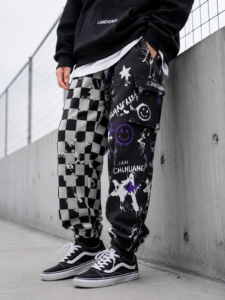
True customization means making deliberate technical choices that build your brand's identity. This includes selecting the right fabric, like soft bamboo or durable organic cotton; choosing a print technique, like puff print for texture; and defining a unique fit, like a modern oversized silhouette.
Your manufacturer shouldn't just take orders; they should act as a consultant. From our experience, the most successful brands are the ones that understand how technical details create their brand's story. For example, a brand focused on modern streetwear might choose an oversized, drop-shoulder fit and a puff print. Why? Because that specific combination creates a distinct look and feel that communicates their brand identity instantly, without needing a logo. Another brand focused on organic baby essentials might choose bamboo fabric. Why? Because its incredible softness and sustainable properties appeal directly to new parents looking for the absolute best for their baby. A great partner helps you make these connections.
Building Your Brand Through Technical Choices
Your brand is built from dozens of small decisions. A good manufacturer will help you navigate them.
| Customization Choice | Why It Matters for Your Brand's Identity |
|---|---|
| Fabric Type | Organic cotton signals durability and a classic feel. Bamboo fiber creates a premium, ultra-soft product for a boutique market. |
| Printing Technique | Screen printing is durable and cost-effective for bold graphics. Digital printing allows for photo-realistic, multi-color art for unique, expressive collections. |
| Garment Fit | A standard, true-to-size fit appeals to a broad, traditional market. An oversized fit immediately positions your brand as modern and fashion-forward. |
| Dyeing & Washing | A simple piece dye offers clean, consistent color. A garment-dye or acid-wash finish creates a vintage, lived-in feel for a different style aesthetic. |
Conclusion
Choosing the right manufacturer is about finding a true partner, not just a supplier. By asking the right questions, you can de-risk production and build a kidswear brand that lasts.