Finding a clothing manufacturer feels overwhelming. Every website promises "high-quality" and "low MOQs," but how can you know who to trust? Choosing the wrong partner can sink your brand before it starts.
To choose the right custom kids' clothing manufacturer, you must look past their marketing claims. Verify their specific quality certifications like GOTS, ask how they maintain consistency when scaling from a small test run to a large bulk order, and confirm they can consult on technical details like fabric and printing.
Finding a manufacturing partner is more than just checking boxes on a features list. It's about asking the right questions to uncover their real capabilities and de-risk your investment. As someone who sees brand inquiries every day, I know the common pitfalls. Let’s walk through how to find a factory that can truly bring your vision to life and grow with you. It starts with learning how to verify what they tell you.
How Can You Verify a Manufacturer's Quality Claims?
You see "premium quality" on every factory's website, but what does that even mean? Trusting these vague terms can lead to receiving clothes that shrink, fade, or fall apart after one wash.
To truly verify quality, ask for specific proof. Request to see their certifications, like GOTS for organic fabrics1 or OEKO-TEX for safety standards2. A serious partner will readily share details on their fabric tests, like those for shrinkage and color fastness, proving their commitment to quality.

At our factory, we know that vague claims don't build trust. Real quality is proven with data and documentation. When we talk to brands, the conversation isn't just about making clothes; it's about protecting their reputation. A technical detail like "color fastness testing" isn't just factory jargon. It’s the process that prevents a customer from emailing you angrily because a new red t-shirt turned their entire load of baby clothes pink. Similarly, "shrinkage testing" ensures the size 2T your customer buys still fits their toddler after laundry day. These details are not extras; they are fundamental to building a brand people love and buy from again. A good manufacturer should be able to provide clear evidence of their processes.
From Vague Claims to Verifiable Proof
Here is a simple table to help you translate a factory's marketing language into concrete questions.
| Vague Claim | Specific Proof to Demand |
|---|---|
| "High-Quality Fabric" | What is the fabric's GSM (grams per square meter)3? Can I see a report on shrinkage tests (e.g., under 5%4)? |
| "Sustainable Materials" | Do you have current GOTS or OCS certifications? Can you trace the origin of the organic cotton? |
| "Safe for Kids" | Can you provide an OEKO-TEX Standard 100 certificate? Can you ensure CPC (Children's Product Certificate) compliance for the US market5? |
| "Durable Construction" | What seam types do you use? Can you provide data from seam strength tests to prevent tears and rips? |
Is a Low MOQ Always the Best Choice for Your Brand?
As a new brand, a low Minimum Order Quantity (MOQ) seems like the perfect solution. It lowers your initial investment and risk. But this can create a false sense of security for your brand's future.
A low MOQ is excellent for testing your first collection. However, you must ask how the factory handles scaling up. A process that works for 100 pieces is very different from one that works for 1,0006, and you need to ensure quality and color remain consistent.
From the questions we get, many brands focus only on that initial MOQ number. But it's just one part of the story. The real question is about capability. A factory might offer a 100-piece MOQ, but how do they achieve it? Often, these small runs are produced in a separate sample room, not on the main production lines7. This is great for a test, but when you come back with a successful design and want 1,000 pieces, the production method changes completely. This can lead to unexpected variations in color, fit, and even fabric feel. A transparent partner will explain their process for both small and large batches, helping you plan for success.
For Startups: Beyond the MOQ
If you're just starting, you need more than just production. You need a partner. Your factory should help you refine your designs, suggest the right materials, and guide you through the sampling process. A low MOQ is a sign that a factory is willing to work with emerging brands, but their support for design development is what will truly help you succeed.
For Established Brands: Consistency at Scale
If you're an established brand, your biggest concern is consistency. You have a loyal customer base that expects the same great quality with every purchase. When you talk to a new factory, ask them directly how they ensure color matching across different dye lots8 and how their QC process guarantees every garment in a 5,000-piece order meets the same standard as your approved sample.
What Does 'Full Customization' Really Mean?
Many manufacturers claim they offer "full customization." Too often, we see brands discover this just means printing their logo on a generic, pre-made t-shirt. This isn't building a brand; it's just decorating.
True customization means making deliberate technical choices that build your brand's identity. This includes selecting the right fabric, like soft bamboo9 or durable organic cotton; choosing a print technique, like puff print for texture10; and defining a unique fit, like a modern oversized silhouette.
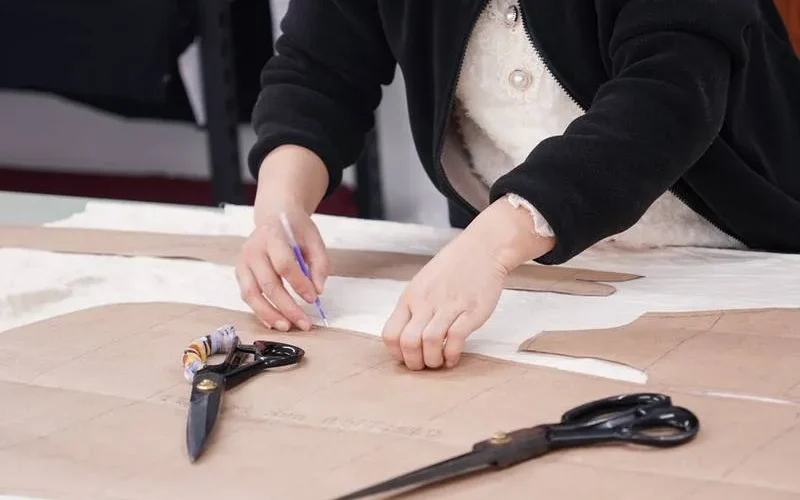
Your manufacturer shouldn't just take orders; they should act as a consultant. From our experience, the most successful brands are the ones that understand how technical details create their brand's story. For example, a brand focused on modern streetwear might choose an oversized, drop-shoulder fit and a puff print. Why? Because that specific combination creates a distinct look and feel that communicates their brand identity instantly, without needing a logo. Another brand focused on organic baby essentials might choose bamboo fabric. Why? Because its incredible softness and sustainable properties appeal directly to new parents looking for the absolute best for their baby. A great partner helps you make these connections.
Building Your Brand Through Technical Choices
Your brand is built from dozens of small decisions. A good manufacturer will help you navigate them.
| Customization Choice | Why It Matters for Your Brand's Identity |
|---|---|
| Fabric Type | Organic cotton signals durability and a classic feel. Bamboo fiber creates a premium, ultra-soft product for a boutique market. |
| Printing Technique | Screen printing is durable and cost-effective for bold graphics. Digital printing allows for photo-realistic, multi-color art11 for unique, expressive collections. |
| Garment Fit | A standard, true-to-size fit appeals to a broad, traditional market. An oversized fit immediately positions your brand as modern and fashion-forward. |
| Dyeing & Washing | A simple piece dye offers clean, consistent color. A garment-dye or acid-wash finish12 creates a vintage, lived-in feel for a different style aesthetic. |
Conclusion
Choosing the right manufacturer is about finding a true partner, not just a supplier. By asking the right questions, you can de-risk production and build a kidswear brand that lasts.
"The Standard - GOTS - Global Organic Textile Standard", https://global-standard.org/the-standard. The Global Organic Textile Standard (GOTS) is an internationally recognized standard that certifies the entire textile supply chain, ensuring that products are made with a high proportion of organic fibers and that both ecological and social criteria are met from harvesting through manufacturing. Evidence role: definition; source type: institution. Supports: The source should define the Global Organic Textile Standard (GOTS) and its core criteria, which include ecological and social standards for the entire textile supply chain of organic fibers.. ↩
"Oeko-Tex - Wikipedia", https://en.wikipedia.org/wiki/Oeko-Tex. OEKO-TEX Standard 100 is a global, independent testing and certification system for raw, semi-finished, and finished textile products at all processing levels, which tests for harmful substances to ensure product safety for consumers. Evidence role: definition; source type: institution. Supports: The source should define the OEKO-TEX Standard 100 and explain that it is a testing and certification system for textiles that screens for a wide range of harmful substances.. ↩
"Fabric GSM & weight | A guide to GSM meaning - with chart - SANVT", https://sanvt.com/blogs/journal/fabric-weight-a-guide-to-gsm?srsltid=AfmBOorF9LwhOelp8Cjth3WkMKh-KE_CFBCLdVuHWs89TwThQCLmFxjI. Grams per Square Meter (GSM) is a standard measurement of fabric weight, indicating the density of the material. While not the sole determinant of quality, a higher GSM generally corresponds to a thicker, more opaque, and more durable fabric, whereas a lower GSM indicates a lighter material. Evidence role: definition; source type: education. Supports: The source should define Grams per Square Meter (GSM) as a metric for fabric weight and density, and explain how higher or lower GSM values can indicate different qualities like thickness and durability.. Scope note: The citation clarifies that GSM is a measure of weight/density, which is an indicator of certain quality aspects like thickness, not a direct measure of overall 'quality' which also includes fiber type and construction. ↩
"Understanding Fabric Shrinkage Standards: A Comprehensive Guide", https://www.linkedin.com/pulse/understanding-fabric-shrinkage-standards-busec. Industry standards for fabric shrinkage, often guided by testing methods from organizations like the American Association of Textile Chemists and Colorists (AATCC), generally consider a dimensional change of up to 5% to be commercially acceptable for many common apparel fabrics after laundering. Evidence role: general_support; source type: institution. Supports: The source should provide information on standard acceptable shrinkage percentages for common apparel fabrics, indicating that a range of 3-5% is often considered acceptable after washing.. Scope note: The source would support that 'under 5%' is a common industry benchmark, not a universal or mandatory rule for all fabric types, as some materials may have different standards. ↩
"Children's Product Certificate | CPSC.gov", https://www.cpsc.gov/Business--Manufacturing/Testing-Certification/Childrens-Product-Certificate. The U.S. Consumer Product Safety Commission (CPSC) requires manufacturers and importers to issue a Children's Product Certificate (CPC) for children's products, certifying that the product complies with all applicable federal children's product safety regulations based on passing test results from a CPSC-accepted laboratory. Evidence role: definition; source type: government. Supports: The source, ideally the U.S. Consumer Product Safety Commission (CPSC), should explain that a Children's Product Certificate (CPC) is a document in which the manufacturer or importer certifies that its children's product complies with all applicable children's product safety rules.. ↩
"[PDF] Scaling E-Textile Production: Understanding the Challenges of Soft ...", https://www.hybridbody.human.cornell.edu/s/iswc22a-sub1102-cam-i11.pdf. Manufacturing principles demonstrate that scaling production from small batches to large volumes involves fundamental changes in process to achieve economies of scale. This shift can affect tooling, labor specialization, and material handling, introducing potential for variation in the final product if not managed carefully. Evidence role: mechanism; source type: education. Supports: The source should explain the concept of economies of scale in manufacturing, detailing how production processes, machinery, and labor utilization are optimized for large volumes and differ from the methods used for small-batch production.. ↩
"Activities and Importance of sample room of an apparel Industry", https://www.academia.edu/11172710/Activities_and_Importance_of_sample_room_of_an_apparel_Industry. In garment manufacturing, a 'sample room' is a dedicated department responsible for creating initial prototypes, fit samples, and small pre-production runs. These are typically crafted by highly skilled artisans using methods that may differ from the high-volume assembly lines used for bulk production. Evidence role: mechanism; source type: education. Supports: The source should describe the function of a sample room in a garment factory, explaining that it is a specialized area with skilled workers and flexible equipment designed for creating prototypes and small test runs, which operates separately from the main production lines optimized for high-volume output.. ↩
"Dye lot - Wikipedia", https://en.wikipedia.org/wiki/Dye_lot. A 'dye lot' refers to a single batch of yarn or fabric that has been dyed together. Due to minor, uncontrollable variations in temperature, dye concentration, and processing time, different dye lots can have slight color differences, making precise color matching across separate production runs a significant challenge in textile manufacturing. Evidence role: definition; source type: education. Supports: The source should define a 'dye lot' as a batch of fabric dyed in a single vat at one time and explain that slight variations in conditions can cause noticeable color differences between separate lots.. ↩
"'Bamboo' Fabrics - FTC Consumer Advice", https://consumer.ftc.gov/bamboo-fabrics. Most fabric marketed as 'bamboo' is a type of viscose rayon, produced by chemically dissolving bamboo pulp and extruding it into fibers. This process yields a material renowned for its softness and smooth drape, though the environmental impact of the chemical processing is a subject of scrutiny. Evidence role: mechanism; source type: encyclopedia. Supports: The source should explain that most bamboo fabric is a form of rayon/viscose, which undergoes a chemical process to break down bamboo pulp. This process results in a fiber that is known for its soft, smooth texture.. Scope note: The citation supports the claim of softness while also introducing a critical limitation regarding the sustainability claims often associated with bamboo fabric. ↩
"What Is Puff Print? - Real Thread", https://www.realthread.com/blog/what-is-puff-print. Puff printing is a textile screen printing method that utilizes an ink mixed with a heat-activated additive. After printing, the garment is cured with heat, causing the ink to expand and create a raised, three-dimensional, and tactile surface. Evidence role: definition; source type: education. Supports: The source should define puff printing as a screen printing technique that uses a special ink containing a heat-activated foaming agent, which expands to create a three-dimensional texture.. ↩
"Digital textile printing - Wikipedia", https://en.wikipedia.org/wiki/Digital_textile_printing. Digital textile printing, including Direct-to-Garment (DTG) technology, applies ink directly to fabric using a process similar to a paper inkjet printer. This method enables the creation of highly detailed, photo-realistic images with a vast color spectrum, making it ideal for complex, multi-color designs without the need for separate screens for each color. Evidence role: mechanism; source type: education. Supports: The source should explain that digital textile printing, such as Direct-to-Garment (DTG), functions like an inkjet printer for fabric, allowing for the reproduction of highly detailed, full-color images with virtually no limit on the number of colors.. ↩
"What is Garment Dye? - Garment Dyeing Process | Off The Cuff - Levi's", https://www.levi.com/US/en_US/blog/article/what-is-garment-dye?srsltid=AfmBOopolkje6QrCX2abFNCpEuNSFpc2GZ5eI_vHwfdsF2uMrFxvj6p0. Garment dyeing is a manufacturing process where clothing is dyed after it has been fully sewn. This technique often results in a softer texture and less uniform color saturation, particularly around seams, which contributes to a characteristic vintage or 'worn-in' appearance. Evidence role: definition; source type: education. Supports: The source should define 'garment dyeing' as a process where a fully constructed garment is dyed, which creates a softer feel and subtle color variations that contribute to a 'lived-in' or vintage aesthetic.. ↩