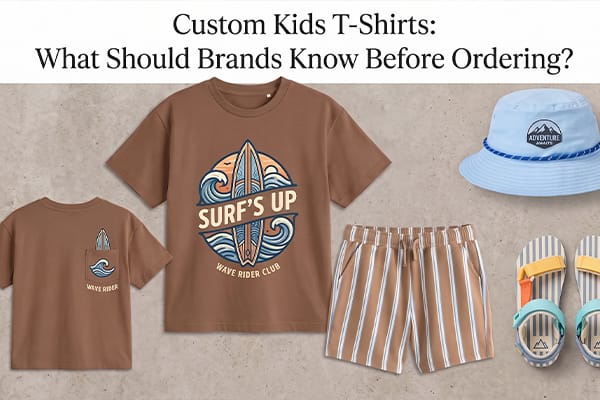
Custom Kids T-Shirts: What Should Brands Know Before Ordering?
Custom kids T-shirts can look simple, but a weak development process can create fit issues, rough handfeel, poor wash performance, and delays before launch. I often see brands start with only a logo or reference image. The better solution is to treat each T-shirt as a real product development project.
Custom kids T-shirts are children’s apparel products that require decisions on fabric, fit, artwork, print method, labels, packaging, sampling, quality control, and production planning. For premium kidswear brands, the best results come from clear specifications, verified samples, and a supplier that understands comfort, durability, safety expectations, and brand presentation.
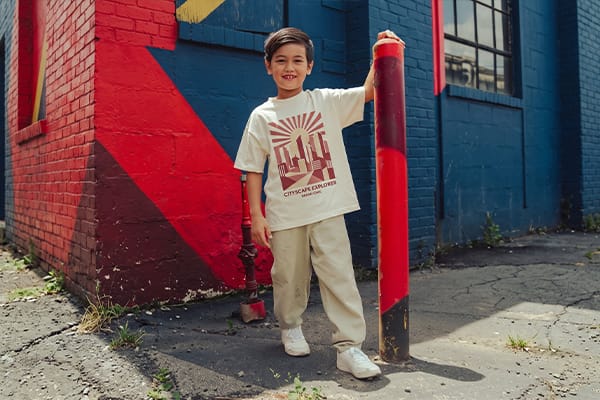
A logo is only one part of the project. When I help overseas brands discuss custom kidswear, I usually start by clarifying the product details behind the design. That early work makes pricing more accurate and reduces surprises during sampling and bulk production.
What Information Do I Need Before Quoting Custom Kids T-Shirts?
A custom kids T-shirt quote can become inaccurate when the buyer sends only a logo, mood board, or online reference image. That creates risk because fabric weight, artwork size, print technique, sizing, trims, and packaging all affect cost and production time.
To quote custom kids T-shirts accurately, I need the fabric type, fabric weight, size range, order quantity, colors, artwork files, print or embroidery method, label requirements, packaging details, target delivery time, and any compliance documents the buyer needs to verify before production.
Why a Logo Is Not Enough
In real inquiry discussions, many brands send a message like: “Can you make this kids T-shirt with our logo?” I understand why. The design may look clear to the brand owner. However, a manufacturer needs more technical details to price and produce the garment correctly.
A custom children’s T-shirt is not only a printed blank. It has several cost drivers:
| Quotation Item | Why It Matters | Example Decision |
|---|---|---|
| Fabric composition | Affects comfort, price, shrinkage, and positioning | Organic cotton, bamboo-cotton, hemp blend, lyocell |
| Fabric weight | Changes handfeel and seasonality | 160gsm lightweight vs. 240gsm premium streetwear |
| Size range | Affects fabric consumption and grading | 2Y–10Y, baby sizes, toddler sizes |
| Fit | Changes pattern and sample development | Regular fit, oversized fit, drop shoulder |
| Print method | Affects durability, handfeel, and cost | Screen print, digital print, puff print, water-based print |
| Artwork size | Changes printing cost and production setup | Chest logo vs. large back graphic |
| Labels and packaging | Affects brand presentation | Neck label, care label, hangtag, polybag |
| Quantity per style/color | Affects unit price and production efficiency | 100 pcs per style vs. 1,000 pcs per style |
For organic kids clothing customization, fabric information is especially important. A brand may ask for organic cotton kids T-shirts, but the final quote depends on yarn quality, fabric construction, dyeing, finishing, and whether the buyer needs documents such as GOTS, OCS, OEKO-TEX Standard 100, CPC, or other compliance-related records. I always recommend that buyers verify certificates and testing documents based on their destination market and product category.
My Practical Quotation Checklist
When I prepare a quote for a custom kidswear brand, I prefer to receive:
- Tech pack or reference images
- Size range and size chart
- Target fabric composition
- Fabric weight or handfeel reference
- Pantone colors or color direction
- Artwork in AI, PDF, PSD, or high-resolution format
- Print placement and dimensions
- Label and packaging requirements
- Estimated order quantity per style and color
- Target delivery date and shipping destination
This information helps me give a more realistic price. It also helps the buyer compare different suppliers fairly. A low quote based on missing details is not a true advantage. It can become expensive later when fabric, print, packaging, or testing requirements are added.
How Should Brands Choose Fabric for Custom Kids T-Shirts?
Fabric selection can create the biggest difference between a basic T-shirt and a premium custom kidswear product. Children feel fabric directly on the skin, and parents often judge quality by softness, breathability, shrinkage, and how the garment looks after washing.
Brands should choose fabric for custom kids T-shirts based on comfort, skin feel, breathability, durability, shrinkage control, sustainability goals, and brand positioning. Organic cotton, bamboo fiber, bamboo-cotton blends, hemp, linen, and lyocell can all work, but each fabric needs sampling before bulk production.
Fabric Is a Brand Decision
I have seen buyers choose fabric only by unit price. That approach can work for low-cost basics, but it is risky for mid-to-high-end children’s clothing brands. Parents may not know fabric technical terms, but they notice when a T-shirt feels scratchy, twists after washing, fades too quickly, or loses shape.
For organic children’s clothing custom production, the fabric should match the selling promise. A boutique brand that markets natural softness may need a smoother organic cotton jersey or bamboo-cotton blend. A streetwear-inspired kidswear brand may prefer heavier cotton jersey with an oversized silhouette. A summer capsule may need a lighter, breathable fabric.
Common Fabric Options for Custom Kidswear
| Fabric Option | Typical Strength | Buyer Consideration |
|---|---|---|
| Organic cotton | Soft, familiar, strong market appeal | Verify certification documents if required |
| Bamboo fiber | Smooth handfeel, breathable feel | Check care performance and fabric stability |
| Bamboo-cotton blend | Balanced softness and structure | Good for everyday premium basics |
| Hemp blend | Natural and durable image | Handfeel may need careful finishing |
| Linen blend | Breathable and textured | Wrinkle appearance should match brand style |
| Lyocell blend | Soft drape and smooth touch | May need testing for shrinkage and recovery |
What I Usually Recommend
For first-time development, I often suggest brands start with a fabric that supports stable production. If the buyer wants a fast prototype, in-stock dyed or printed fabrics can help reduce sampling time. If the brand needs exact Pantone colors or special fabric finishing, custom dyeing is possible, but it should be planned earlier.
For premium custom organic kids T-shirts, I usually discuss these points before sampling:
- Is the T-shirt for summer, all-season, or a heavier streetwear collection?
- Does the brand want soft drape or structured shape?
- Will the garment use large prints, puff prints, embroidery, or appliqué?
- Does the fabric need to support baby, toddler, or older kids’ sizes?
- Does the buyer need certification documents for organic or safe textile claims?
Fabric should never be treated as a background detail. It affects the garment’s comfort, print effect, shrinkage, and final customer review. A small saving in fabric cost can become a bigger problem if the product does not match the brand’s quality promise.
Why Is Sampling Essential for Custom Kids T-Shirts?
Sampling can feel like a delay when a brand is preparing a launch. However, skipping or rushing samples increases the risk of wrong fit, poor print effect, color mismatch, construction issues, and bulk production problems that are much harder to correct later.
Sampling is essential for custom kids T-shirts because it verifies fabric handfeel, fit, sizing, artwork placement, print quality, color, shrinkage, seam construction, and bulk production repeatability. For serious kidswear brands, sampling is not a delay. It is risk control before money is committed to production.
Sampling Protects the Brand
In my daily work with overseas kidswear brands, sample discussions often reveal problems that were invisible in the original design file. A chest print may look balanced on a size 8 but too large on a toddler size. A drop-shoulder fit may need adjustment because children’s proportions are different from adults. A puff print may look attractive but feel too heavy if the artwork is large.
That is why I treat sampling as a technical checkpoint.
For custom kids T-shirt manufacturing, a sample should check:
- Fit and silhouette
- Neckline comfort
- Shoulder width
- Sleeve length
- Garment length
- Fabric softness
- Print handfeel
- Artwork position
- Color appearance
- Seam strength
- Washing behavior
- Label placement
- Packaging direction
What Happens During a Typical Sample Stage?
At Kids Wear Factory, our standard sample lead time is usually 7–15 days, depending on fabric availability and design complexity. If fabric sourcing is needed, quotation and development can take longer. The first sample may use simplified packaging or temporary trims, especially when the goal is to confirm fit, fabric, and print effect first.
A typical process looks like this:
- Confirm design direction
- Review tech pack or reference sample
- Select fabric
- Confirm print or embroidery method
- Develop pattern and size details
- Produce sample
- Ship by express courier
- Receive buyer comments
- Revise fit, print, or construction if needed
- Approve pre-production direction
Sampling for Organic Kids Clothing Custom Projects
For sustainable children’s apparel, sampling is also important because natural and eco-focused fabrics can behave differently. Organic cotton, bamboo blends, hemp blends, and lyocell blends may have different shrinkage rates, drape, and print absorption. A fabric that looks perfect on a swatch may perform differently when sewn into a full garment.
I recommend buyers review samples in real conditions:
- Wash the sample according to the planned care label.
- Measure before and after washing.
- Check whether the neckline twists or stretches.
- Review print cracking, fading, or stiffness.
- Let the sample be worn if possible.
- Check comfort around the neck and underarm area.
For children’s clothing, comfort is not a soft detail. It is part of product quality. A premium kidswear brand should not approve bulk production only because the front image looks good.
How Can Brands Compare Custom Kids T-Shirt Manufacturers?
Supplier comparison should go beyond the lowest unit price. A suitable manufacturer for premium children’s T-shirts should understand fabrics, fit, artwork execution, private label branding, quality control, production planning, and international shipping requirements.
Brands should compare custom kids T-shirt manufacturers by reviewing product development support, sustainable fabric options, print and embroidery capability, MOQ flexibility, sampling quality, quality control process, communication clarity, lead-time realism, branding customization, and the documents they can provide for buyer verification.
Price Is Only One Part of Supplier Evaluation
I understand why buyers ask for the best price first. Cost matters. However, I usually encourage brands to ask: “What is included in this price?” Two factories may quote the same T-shirt very differently.
One quote may include:
- Better fabric quality
- Custom dyed fabric
- Neck labels and care labels
- More careful printing
- Pre-production sample support
- 100% final inspection
- Export packaging
- Realistic production planning
Another quote may exclude many of those details. That makes direct price comparison misleading.
What a Premium Kidswear Supplier Should Support
For mid-to-high-end children’s clothing brands, a useful supplier should offer more than blank T-shirts. At Kids Wear Factory, we support OEM/ODM children’s apparel development, including:
- Organic and sustainable fabric sourcing
- Custom kids’ T-shirt development
- Oversized and streetwear-inspired fits
- Pantone color customization
- Screen printing
- Digital printing
- Puff printing
- Water-based printing
- Embroidery and appliqué
- All-over print designs
- Custom neck labels and care labels
- Hangtags and packaging
- Private label kidswear solutions
- Small-batch production from 100 pieces per style
- Bulk production planning, usually 6–8 weeks depending on order details
These capabilities matter because modern kidswear brands often need a full collection, not one isolated product. A brand may start with custom kids T-shirts, then expand into sweatshirts, leggings, dresses, shorts, or matching sets. A stronger supplier can support design consistency across the line.
Questions I Suggest Asking a Manufacturer
Before choosing a private label kids T-shirt manufacturer, I suggest asking:
- Can you help if I only have inspiration images?
- Can you work from a complete tech pack?
- What sustainable fabric options can you source?
- Can you explain the difference between print methods?
- What is your MOQ per style?
- How long does sampling usually take?
- What quality checks do you perform?
- Can you provide documents for fabric or compliance verification?
- How do you handle size grading for children?
- How do you control consistency between sample and bulk production?
Quality Control Points to Review
For children’s apparel production, quality control should be specific. I prefer to discuss QC before bulk production, not after problems appear.
Important checks may include:
| QC Area | What Buyers Should Confirm |
|---|---|
| Fabric inspection | Defects, shade, handfeel, shrinkage direction |
| Color fastness | Buyer should verify required testing for target market |
| Print quality | Placement, curing, cracking, handfeel |
| Seam construction | Strength, neatness, comfort |
| Sizing | Measurement tolerance by size |
| Needle detection | Especially important for children’s apparel |
| Final inspection | Appearance, packaging, labels, quantity |
Our factory performs inspections from raw materials to finished packaging, including fabric shrinkage testing, color fastness checks, fabric defect inspection, seam strength review, garment durability verification, needle detection, and final inspection before shipment. For any formal market compliance claim, I still advise buyers to verify documents and consult qualified professionals for their target country.
How Should Brands Plan Production for Custom Kids T-Shirts?
Production planning becomes easier when the brand confirms design, fabric, sample approval, labels, packaging, and shipping needs before bulk production begins. Unclear decisions can create delays, especially when custom dyeing, special printing, or branded trims are involved.
Brands should plan custom kids T-shirts by building a timeline for quotation, fabric sourcing, sample development, sample revision, pre-production approval, bulk manufacturing, quality inspection, packaging, and shipping. A realistic plan helps protect launch dates and reduces costly last-minute changes.
A Practical Timeline
For most custom T-shirt projects, I suggest thinking in stages. The timeline depends on fabric availability, printing complexity, order quantity, and revision rounds. However, a simple planning model helps brands prepare.
| Stage | Typical Timeframe | Notes |
|---|---|---|
| Initial quote | Around 2 days | May take up to 4 days if fabric sourcing is needed |
| Sample development | 7–15 days | Depends on fabric and design complexity |
| Sample shipping | Varies by country | Usually express courier |
| Revision round | Varies | Fit or print changes may require another sample |
| Bulk production | 6–8 weeks | Depends on quantity and construction |
| Shipping | Varies | Sea, air, railway, truck, or express options |
Common Causes of Delay
Most delays are preventable. I often see issues come from late decisions rather than factory sewing time.
Common causes include:
- Artwork files are not production-ready.
- Pantone colors are not confirmed.
- Fabric choice changes after sampling.
- Labels and packaging are approved too late.
- Size charts are incomplete.
- Print placement is unclear across sizes.
- The buyer changes quantity after price confirmation.
- Compliance documents are requested late.
For custom organic kids clothing, fabric sourcing can add time. If a brand needs a very specific organic cotton fabric, a special bamboo blend, or custom dyed sustainable fabric, it should plan earlier. Stock fabric may support faster sampling, but exact bulk fabric still needs confirmation before production.
How I Recommend Brands Prepare
Before starting bulk production, I like to have:
- Approved sample or approved pre-production sample
- Confirmed size chart and grading
- Final fabric and color approval
- Final artwork files
- Approved print strike-off if needed
- Confirmed labels and care instructions
- Confirmed packaging method
- Purchase order and quantity breakdown
- Shipping plan and delivery expectation
Good production planning does not remove every risk, but it reduces avoidable problems. It also builds trust between brand and factory. When both sides work from the same approved details, the project becomes much smoother.
Frequently Asked Questions
What is the MOQ for custom kids T-shirts?
Our flexible minimum order quantity usually starts from 100 pieces per style. The final MOQ can depend on fabric type, color, printing method, label customization, and order complexity. Custom dyed fabrics or special trims may require higher quantities.
Can I make organic cotton kids T-shirts with private labels?
Yes, we support organic cotton kids T-shirts with private label customization, including neck labels, care labels, hangtags, logo details, and packaging. If your brand needs organic certification documents or market-specific compliance records, I recommend verifying the required documents before bulk production.
How long does custom kids T-shirt sampling take?
Standard sample development usually takes 7–15 days, depending on fabric availability, design complexity, printing, and trim requirements. If fabric sourcing or custom dyeing is involved, the timeline may be longer. Sampling helps verify fit, fabric feel, print effect, and construction before bulk production.
Which print method is best for children’s T-shirts?
The best print method depends on the artwork, fabric, handfeel, durability expectations, and budget. Screen printing works well for many solid graphics. Digital printing supports detailed artwork. Puff printing adds texture. Water-based printing can create a softer feel. Sampling is the safest way to confirm results.
What should I prepare before contacting a custom kids T-shirt manufacturer?
You should prepare a tech pack or reference image, size range, quantity, fabric preference, artwork files, color requirements, label details, packaging needs, and target delivery date. If you do not have a full tech pack, I can still help review your concept and guide the next steps.
Conclusion
Custom kids T-shirts are more than printed basics. They involve fabric comfort, children’s fit, artwork execution, sampling, quality control, private label details, and realistic production planning. A small unit-cost difference matters less than a product that protects your brand reputation after washing and wearing. If you are building organic children’s clothing, sustainable kidswear, or premium private label T-shirts, I invite you to contact Kids Wear Factory and share your design idea, tech pack, or reference images.