How Do You Find the Best Kids Wear Manufacturer for Your Brand in 2026?
leading paragraph: Struggling to find the right manufacturer? You fear a bad choice will sink your brand before it starts. This guide helps you find the perfect partner for your needs.
snippet paragraph: The best kids wear manufacturer isn't a single company, but a partner whose specialties perfectly match your brand’s needs. Focus on their expertise in materials, order quantity, and design style to find the right fit for your unique vision.

Transition Paragraph: I've seen so many brands start their search by asking, "Who is the best manufacturer?" After more than 25 years in this industry, I can tell you that's the wrong question. A factory that's perfect for a big-box store's basic tees would be a terrible fit for a startup brand's organic, puff-print hoodies. The right question is, "Who is the best manufacturer for me?" Instead of giving you a simple ranked list, I'm going to walk you through the different types of manufacturers. This will help you identify the right category of partner for your brand's specific needs. Let's look at some notable factories based on what they do best.
LOOP START
Who are the best manufacturers for sustainable and organic kids' wear?
leading paragraph: Your brand values sustainability, but finding a factory that truly delivers is tough. You worry about greenwashing and false claims, which could put your brand's reputation at risk.
snippet paragraph: For sustainable wear, look for manufacturers with GOTS or OEKO-TEX certifications. Partners like Organic Apparel USA and many Portuguese factories are known for this. They have proven supply chains for materials like organic cotton, bamboo, and hemp, ensuring genuine eco-friendly production.
Dive deeper Paragraph: Finding a truly sustainable partner goes beyond their website claims. At Kids Wear Factory, we always tell our clients to ask for proof. Don't just ask, "Do you use organic cotton?" Instead, ask, "Can you share examples of recent projects using GOTS-certified organic cotton with water-based dyes?" This forces them to demonstrate experience.
Key Certifications to Look For
- GOTS (Global Organic Textile Standard)1: This is the gold standard. It covers the entire production process from fiber to finished garment, ensuring both environmental and social criteria are met.
- OEKO-TEX Standard 1002: This certification ensures that every component of the product has been tested for harmful substances and is safe for human health. This is crucial for children's clothing.
Many brands find great partners in Portugal, which has a strong reputation for high-quality organic jersey fabrics3. Others, like Organic Apparel USA, focus on a domestic supply chain for the American market. In Asia, many modern factories, including us, have built strong relationships with certified fabric mills to meet the growing demand for sustainable materials like bamboo, TENCEL™ Lyocell4, and hemp.
LOOP END LOOP START
Which manufacturers excel in modern streetwear and oversized fits?
leading paragraph: Your vision is all about rad, oversized silhouettes and unique prints. But most factories only produce classic, boring fits. Their samples just don't capture your brand's edgy vibe.
snippet paragraph: For streetwear, you need a specialist who understands modern trends. Factories like Kids Wear Factory in China or Stanley/Stella5 in Europe focus on fashion-forward silhouettes, custom dyes, and techniques like puff printing, which are essential for creating authentic, rad-inspired kidswear.
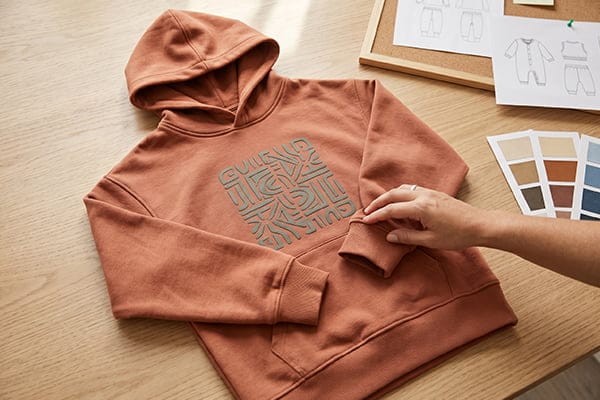
Dive deeper Paragraph: Streetwear isn't just about printing a graphic on a T-shirt. It's about the feel, the fit, and the attitude. A common mistake we see brands make is trying to create a streetwear look with a factory that only knows how to make traditional, fitted basics. It never works. You need a partner who lives and breathes modern fashion. For example, getting an oversized hoodie right involves more than just sizing up a pattern. It requires understanding fabric weight, drape, and how to construct the shoulder and sleeve to create the right silhouette.
From our experience helping brands launch, the most critical factor is the factory's ability to interpret your vision. Can they take your mood board and reference garments and translate them into a technical design? We do this every day. Key capabilities to look for are:
- Specialized Printing: Experience with puff printing, high-density screen printing, and custom washes.
- Fabric Sourcing: Ability to source heavy-weight fleece and French terry.
- Pattern Making: Expertise in developing modern, oversized blocks.
While we at Kids Wear Factory specialize in this full-service OEM approach, companies like Stanley/Stella are a great example of a supplier who gets the aesthetics right with their high-quality, fashion-forward blank apparel.
LOOP END LOOP START
What are the best options for brands needing low MOQ flexibility?
leading paragraph: You have a brilliant idea for a new kids' line. But high minimum order quantities (MOQs) from most factories feel like an impossible barrier, risking all of your startup capital.
snippet paragraph: For low MOQs, look for manufacturers that specifically cater to startups. Factories like Hawthorn6 in the UK and many smaller workshops, including us at Kids Wear Factory, offer MOQs starting around 50-100 pieces per style, allowing you to test the market.
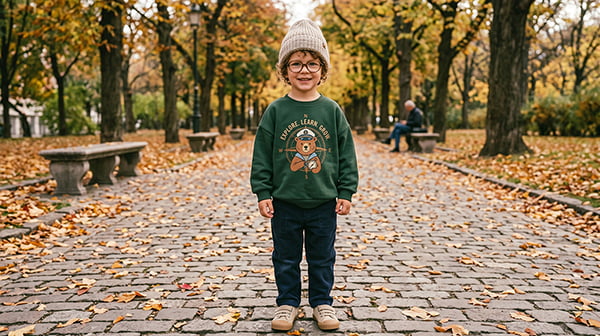
Dive deeper Paragraph: Low MOQ is a lifesaver for emerging brands. It allows you to launch with more styles, test new designs with less risk, and manage your cash flow more effectively. However, it's important to understand the trade-offs. A lower quantity almost always means a higher price per unit because the factory has fixed costs for setup, sourcing, and sampling that get divided over fewer pieces.
A good partner will be transparent about this. When we work with a new brand, we show them how the price per piece changes at 100, 300, and 500 pieces. This helps them make an informed business decision.
There are different types of low-MOQ partners:
- Full-Service Specialists: Companies like Hawthorn (UK) or Kids Wear Factory (China) are set up to handle small batches from development to production.
- Manufacturing Platforms: Services like MakersValley7 connect brands directly with Italian artisans, many of whom work with small quantities.
Here’s a simple breakdown:
| Feature | Low MOQ (50-200 pcs) | High MOQ (1000+ pcs) |
|---|---|---|
| Price per Unit | Higher | Lower |
| Upfront Cost | Lower | Higher |
| Risk | Lower | Higher |
| Flexibility | High (easy to test designs) | Low (committed to one style) |
Choosing a low MOQ partner is a strategic decision to prioritize flexibility over the lowest possible unit cost.
LOOP END LOOP START
Who are the top manufacturers for high-volume basics and classic styles?
leading paragraph: Your business model relies on volume and competitive pricing. You need simple, classic kids' clothes produced efficiently at a massive scale, but finding a reliable large-scale partner is daunting.
snippet paragraph: For high-volume basics, large-scale manufacturers in countries like Bangladesh, Vietnam, and India are the go-to choice8. Factories like Shasha Denims9 (Bangladesh) or Saitex10 (Vietnam) have immense capacity and are optimized for cost-effective production of classic apparel styles for major retailers.
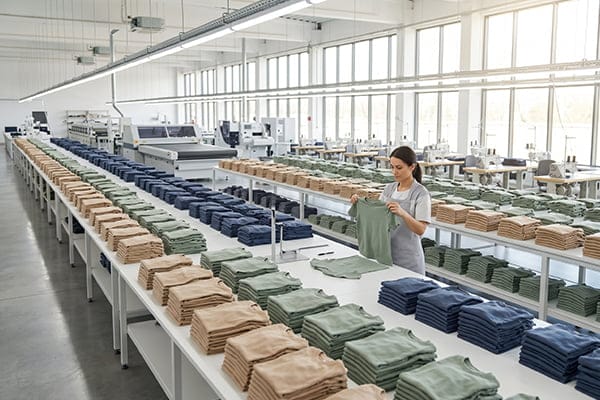
Dive deeper Paragraph: This category of manufacturer operates on a completely different planet from the partners a niche brand needs. Their entire operation is built for scale, efficiency, and cost optimization. They are the powerhouses behind the collections you see at major global retailers like H&M, Zara, and Target. Their minimum order quantities often start in the thousands, or even tens of thousands, of pieces per style.
For a brand focused on modern design, sustainability, and quality, these factories are usually a poor fit. Their systems are not designed for the level of customization, specialized fabrics, or hands-on communication that boutique brands require. A company like Saitex in Vietnam is a great example of a giant doing incredible things with sustainability at scale, but their model is built for large-volume clients. Similarly, Shasha Denims Ltd. in Bangladesh is a massive player known for its capacity. Understanding this distinction is key. It reinforces that the "best" factory for Uniqlo is likely the "worst" factory for your startup streetwear brand. Your goal is not to find the biggest factory, but the one that specializes in serving brands just like yours.
LOOP END LOOP START
How do you find a reliable full-service OEM/ODM partner?
leading paragraph: You have a strong brand vision but lack a technical design team. You need a partner who does more than just sew—you need someone to help with development, sourcing, and problem-solving.
snippet paragraph: A full-service OEM/ODM partner acts as an extension of your team. Factories like Thygesen Textile Group11 (Vietnam) or us at Kids Wear Factory can guide you from a simple idea or mood board to a fully branded, packaged, and shipped product.
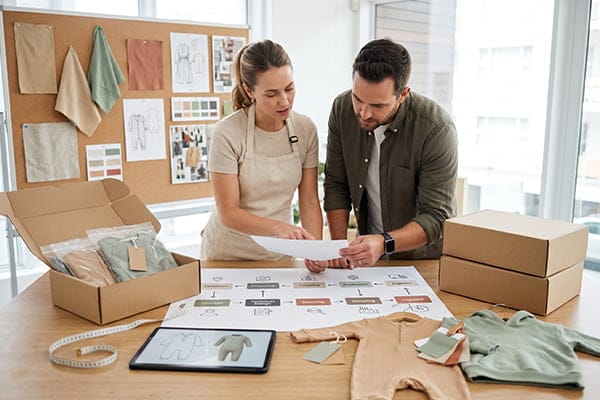
Dive deeper Paragraph: Let's quickly define these terms. OEM (Original Equipment Manufacturer)12 is when you provide the factory with a complete technical design (a tech pack), and they produce it for you. ODM (Original Design Manufacturer) is when the factory has pre-existing designs that you can choose from and modify with your own branding. In reality, most good partners, including us, operate in a hybrid space.
I remember a customer who came to us with just a Pinterest board and a few reference garments she bought. She had a clear vision but no idea how to create a pattern or a tech pack. That's where a true partner shines. We worked with her for weeks, developing custom patterns, sourcing the perfect organic cotton fleece, and running multiple sample rounds to get the fit just right. This is what a full-service partner does. They fill in the gaps in your technical expertise. Look for partners like Thygesen Textile Group in Vietnam or Zega Apparel in the USA who advertise these capabilities. When you interview them, focus on their process. Ask them to walk you through how they would take an idea from concept to completion.
LOOP END
Conclusion
Finding the right factory is about matching capabilities. Don't look for the "best" manufacturer; look for your best partner by defining your needs in fabric, style, and volume first.
"The Standard - GOTS - Global Organic Textile Standard", https://global-standard.org/the-standard. A source from the Global Organic Textile Standard organization can provide the official definition, criteria, and scope of the certification, confirming its comprehensive approach from raw material harvesting through to manufacturing. Evidence role: definition; source type: institution. Supports: The source should define the Global Organic Textile Standard (GOTS) and outline its scope, including its environmental and social criteria for the entire textile supply chain.. ↩
"OEKO-TEX® STANDARD 100", https://www.oeko-tex.com/en/our-standards/oeko-tex-standard-100/. The official OEKO-TEX website or a textile research institute can define the Standard 100 certification, detailing its role in testing for harmful substances to ensure product safety for consumers. Evidence role: definition; source type: institution. Supports: The source should define the OEKO-TEX Standard 100 and explain its purpose, which is to test textiles for a wide range of harmful substances.. ↩
"The Growing Allure of "Made in Portugal" - Reddit", https://www.reddit.com/r/malefashionadvice/comments/iy2a33/the_growing_allure_of_made_in_portugal/. An article from a textile industry trade journal or a market analysis report can support the claim by discussing Portugal's position in the European textile market, often highlighting its specialization in high-quality, flexible, and sustainable production. Evidence role: general_support; source type: other. Supports: The source should discuss the Portuguese textile industry's focus on quality, innovation, and sustainability, which contributes to its reputation.. Scope note: The source will likely provide contextual support for Portugal's reputation rather than direct proof that it is universally considered the best. ↩
"Lyocell - Wikipedia", https://en.wikipedia.org/wiki/Lyocell. A source from the manufacturer (Lenzing) or a textile science encyclopedia can define TENCEL™ Lyocell fibers, explaining they are derived from sustainably sourced wood pulp through a closed-loop production process. Evidence role: definition; source type: other. Supports: The source should define TENCEL™ Lyocell, explain that it is a brand of lyocell fiber, and describe its production from wood pulp, which is often cited as a reason for its sustainability credentials.. ↩
"Stanley/Stella| Sustainable Fashion for the U.S. Market", https://stanleystella.com/en-us. The company's official website describes its focus on producing high-quality, sustainable, and fashion-forward blank apparel for the B2B market, showing a collection of modern silhouettes. Evidence role: case_reference; source type: other. Supports: The source should showcase the company's product catalog, which includes modern fits and styles, and provide information about its brand ethos.. Scope note: As the company's own website, the information is promotional, but it serves to verify the types of products and styles they offer. ↩
"Hawthorn: Clothing Manufacturers UK - Low Order Quantity", https://www.hawthornintl.com/. The company's official website details its services, confirming its specialization in full-service manufacturing for brands with low minimum order quantity requirements. Evidence role: case_reference; source type: other. Supports: The source should confirm that the company is a UK-based clothing manufacturer that specializes in low minimum order quantities for startups and small brands.. Scope note: The source is the company's own website and serves to verify its stated business model, not to provide a third-party endorsement of its quality or reliability. ↩
"High-End Apparel Manufacturing (@makersvalley) - Instagram", https://www.instagram.com/makersvalley/. The platform's official website describes its service as a B2B platform connecting designers and brands with Italian apparel and accessory manufacturers, many of whom accommodate low MOQs. Evidence role: case_reference; source type: other. Supports: The source should explain the platform's business model, which connects fashion brands with a network of Italian manufacturers and artisans for product development and small-batch production.. Scope note: As the platform's own website, the information is self-reported, but it serves to explain its business model as described in the article. ↩
"List of countries by textile exports - Wikipedia", https://en.wikipedia.org/wiki/List_of_countries_by_textile_exports. Data from the World Trade Organization or reports from international business consultancies regularly rank Bangladesh, Vietnam, and India among the top global exporters of apparel, confirming their role in high-volume production. Evidence role: statistic; source type: institution. Supports: The source should provide data showing that Bangladesh, Vietnam, and India are among the world's largest exporters of ready-made garments.. ↩
"Home - Shasha Denims PLC", https://shashadenims.com/. The company's official website and publicly available investor information describe its large-scale operations, production facilities, and status as a major denim and textile manufacturer in Bangladesh. Evidence role: case_reference; source type: other. Supports: The source should provide information about the company's size, production capacity, and role in the Bangladeshi textile industry.. Scope note: Information from the company itself serves to verify its stated capacity and market focus, rather than providing an independent comparative analysis. ↩
"Purpose - Saitex", https://www.sai-tex.com/pages/purpose?srsltid=AfmBOopnbW2KDyg8Ww7Rzi6mIig5wJAnAvzTkU6bPr0f0CDGZCVoolsL. Third-party articles in business or fashion publications, as well as the company's own sustainability reports, document its investments in clean-tech manufacturing processes and its status as a certified B Corporation, supporting the claim of its focus on sustainability at scale. Evidence role: case_reference; source type: other. Supports: The source should describe the specific sustainability initiatives undertaken by Saitex, such as water recycling, use of renewable energy, and fair labor practices.. ↩
"Thygesen Textile Vietnam: The Trustworthy Clothing Manufacturer", https://thygesenapparel.com/. The company's official website describes its capabilities as a full-service manufacturer in Vietnam, detailing its OEM and ODM services that cover the entire production process from concept development to finished goods. Evidence role: case_reference; source type: other. Supports: The source should confirm that the company offers comprehensive OEM and ODM services, positioning itself as a 'one-stop-shop' for apparel manufacturing.. Scope note: As the company's own website, the information is self-reported but serves to verify its stated business model and service offerings. ↩
"Original equipment manufacturer - Wikipedia", https://en.wikipedia.org/wiki/Original_equipment_manufacturer. An entry in a business encyclopedia or an article from a manufacturing industry resource can define OEM as a model where a company manufactures products or components that are then marketed and sold by another company under its own brand name, based on designs provided by the client. Evidence role: definition; source type: encyclopedia. Supports: The source should define Original Equipment Manufacturer (OEM) in a business or manufacturing context.. ↩